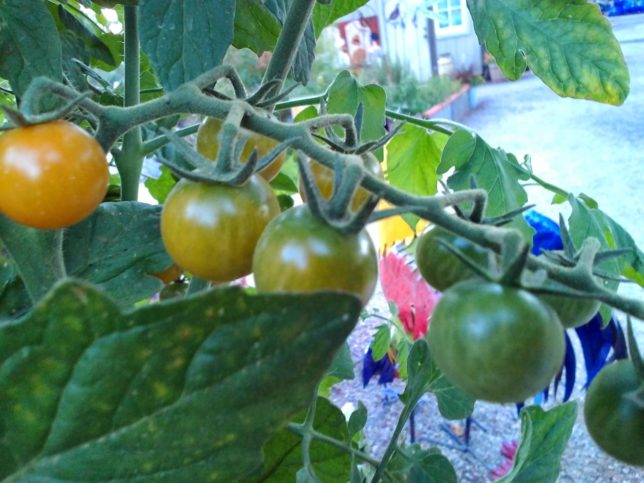
Here is a list of the vegetables that have come in on this week’s orders. There is no guarantee about specific availability when you visit. We have lots of fun varieties to try this year!
Colorful & Classy Groundcover Drift Roses are prolific bloomers, disease resistant, low maintenance, drought tolerant, and best of all, attractive garden and landscape focal points in themselves. In addition to being an excellent choice for general “ground covers”, their size and versatility make them an ideal addition to smaller gardens, combination planters and even container gardens and hanging baskets where their attractive good looks provide dimensions of color and foliage probably unavailable through any other means.
Since the Drifts were specially created to be ground cover roses, they have a low growing characteristic 1½’ tall and 2′ wide. And beautiful colors including white, pink, peach, coral, red & soft yellow. We are currently well stocked with plants that are continuous bloomers from spring to early frost; they are naturally dwarf, with very dark glossy attractive foliage.
As ground covers, Drift roses kept the best of their parent pedigrees — they are a cross between full-size groundcover roses and miniatures. From the former they kept the toughness, vigor, disease resistance and winter hardiness. From the miniatures, they inherited their well-managed size and repeat-blooming nature. To top it off, Drift Roses are easy to establish and are low maintenance landscape plants.
With all these benefits and good looks too, it is no mystery that Drift Roses are becoming one of our Valley’s most popular flowering plant options. If you have been looking for a way to add a fresh new look to your to garden and landscape check out Drift Roses.
There are several key elements in growing a successful and fruitful vegetable garden, one of which is “Mother Nature”. We can’t always predict or control what nature brings, but the following steps can help improve your success rate.
Soil Preparation Soil prep is the #1 key to a successful garden. Most of our valley soils have a high clay content and must be loosened to allow for proper drainage and better root growth. The addition of soil amendments or organic conditioners plays a big role in turning our heavy soil into “good garden loam”.
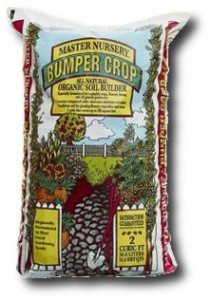
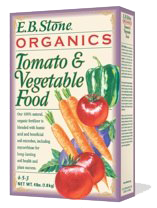
First, remove all large rocks, weeds, and debris from the planting area. For a 10′ x 10′ sq. area, rototill or work into the soil 5-8 bags of Bumper Crop, 15 pounds of E.B. Stone Tomato & Vegetable Food (use less if you use a traditional fertilizer instead of an organic selection like E.B. Stone), 5 lbs. of Iron Sulfate and between 5 and 40 pounds of gypsum. This will provide you with a soil that is better draining and rich in nutrients.
If you are planting in a raised bed, remember that the soil should be refreshed each season for maximum production. We recommend using our Master Nursery Professional Potting Soil to add soil volume to beds that have settled. Mix in Bumper Crop along with E.B. Stone Tomato & Vegetable Food, Iron Sulfate and gypsum and you are ready to “grow”.
Planting Vegetables may be started from seed or “starter” plants. A 4-inch potted plant gives you a head start in the growing process and in many cases is more efficient for the urban garden. However, if you start from seed, you will have to thin the seedlings as they grow to get stronger, healthier plants.
Spring planting is generally done after the danger of frost, which for the Valley is the first week of April. Spring/Summer crops include tomatoes, peppers, squashes, eggplants, cucumbers, corn, beans, pumpkins, strawberries, and melons. Some of your leafy green vegetables can also be grown now if given some special care.
Fall planting is generally started as the summer heat subsides, which for the Valley is on or about October 1st. Fall/Winter crops include artichokes, asparagus, broccoli, Brussels sprouts, cabbages, cauliflower, kale, lettuces, mustards, onions, peas, rhubarb, swiss chard, spinach, and potatoes in January.
When planting small starter plants, be extra gentle with the stem where it enters the ground or crown of the plant, as it can be damaged easily in transplanting and then your plant will fail. Also, make sure not to bury the stem of the plant under extra soil, the crown needs to “breathe”. The exception is tomato plants, whose stems can be buried. Each hair will turn into a root. When you plant, mix into the soil a “starter” fertilizer like E.B. StoneSure Start. This helps the young plants develop a stronger root system.
Fertilizing Fertilization is the 2nd key component to a fruitful garden. A “starter” fertilizer like E.B Stone Sure Start, will get your young transplant off to a good beginning. After about 3-4 weeks you’ll need to start your regular fertilizing schedule.
We recommend using organic or organic based fertilizers such as E.B. Stone once a month since they provide many benefits to the crops and soil.
Fertilizers should never be applied to dry, thirsty plants. Water your plants first, let a couple hours pass then apply your fertilizer and then water the plants again. Avoid feeding on extra hot days (over 85 degrees).
Tomato & Vegetable Food 4-5-3 E.B. Stone Tomato & Vegetable Food is formulated from quality natural organic ingredients for use throughout the vegetable garden as well as with soft fruits like strawberries.
It will contribute to even plant growth without producing excessive foliage at the expense of fruit. The additional phosphorous helps to ensure the production of high-quality fruits and vegetables.
The calcium in E.B. Stone Tomato & Vegetable Food aids in preventing disorders like blossom end rot.
Watering Watering is the 3rd key to a successful garden. Water new transplants right away and keep young, establishing plants evenly moist. A maturing vegetable garden is perfectly suited to be water-wise since veggies will fruit better if kept on the dry side. Drip systems and soaker hoses can be used for the vegetable garden. Soaker hoses, although left on for an hour or more at a trickle can still reduce water use by as much as 70%.
With drip systems, you’ll need to use 3 emitters per plant, triangulated around the plant, and run the system for 1 hour to start, then increase it to 2 hours when the plant has grown. How frequently you will have to water depends mostly on your soil’s water holding capability and secondly on weather conditions. In general, you want to thoroughly soak your vegetable plants and then let them go dry in between waterings. When you see the plants wilting (droopy), and you know it’s been awhile since you’ve watered, then it’s time to water again. However, temperature extremes will cause plants to droop even though they have enough water.
Mulching Mulching with 3-4 inches of shredded or nugget forest material helps to conserve water, moderate soil temperatures near the crown of the plant and discourage weeds. Studies have also shown that plants that have been mulched, grow faster and develop higher yields in the long term. We recommend any Master Nursery Bark material. Mulch in late spring to allow the sun to warm the soil early on.
Pest Management The first line of defense for your new plants is to protect them from snails, slugs, and earwigs with organic Sluggo Plus. Spread bait, “1 tablespoon per square yard” in a broad pattern out from the plant base of your plants. Read label directions for the frequency of reapplication. For other pest problems, it is best to identify which pest you’re dealing with before treating. If you are not sure what you’ve got, you can always bring some into the nursery in a sealed container. Ladybugs make a good biological control for aphids and some other soft-bodied insects. Captain Jack’s products, (Spinosad) and Bonide All Season Spray Oilare good broad-spectrum pesticides that are organic (OMRI approved) and treat the majority of vegetable pests.
Other Tips & Hints
In spring, new plants should be transplanted into the ground late in the day, (just before sunset), so they will not suffer from heat stress.
Tomato flowers will not set fruit if nighttime temperatures drop below 55 degrees and usually will drop off.
When your tomatoes are blooming, shake the plants to aid in pollination. This will increase fruit set. (This is helpful with peppers too). Spray open yellow flowers with Bonide Blossom Set to enhance fruit set.
Even out watering on tomato plants once the fruit has set and begins to color.
Cooler nighttime temperatures delay the ripening of many spring veggies.
Mix in a tablespoon of Magnesium Sulfate (Epsom Salts) in the bottom of the hole for tomatoes. Apply a tablespoon monthly through the growing season.
Please note that availability is subject to change and this list does not represent stock on hand – we sell out very quickly so if you see something you want, hurry in!
We typically reach for flowers when thinking about adding a dash of color to our gardens. But for true season-long interest in the garden, consider a shrub that will give you lasting color. When you plan your garden using colorful shrubs, their leaves lend a rainbow of hues to enjoy. The different shades and textures offer a burst of color – some even change colors throughout the year.
Take a look at these colorful shrubs which are real standouts in the landscape:
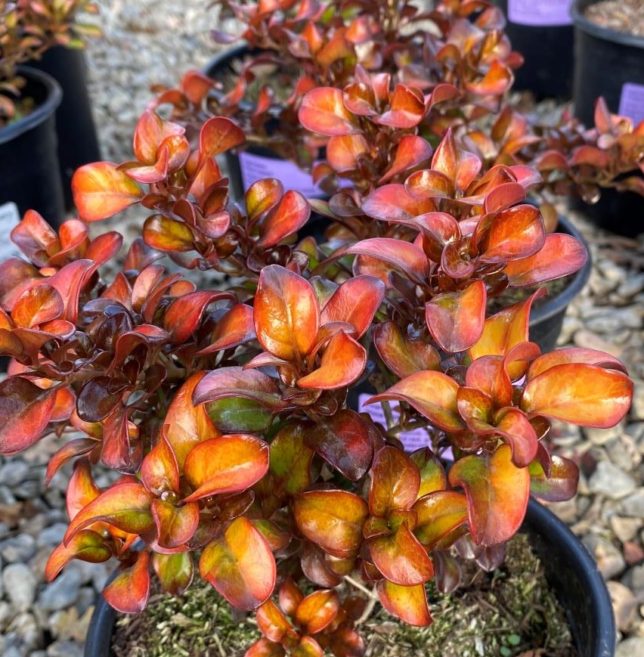
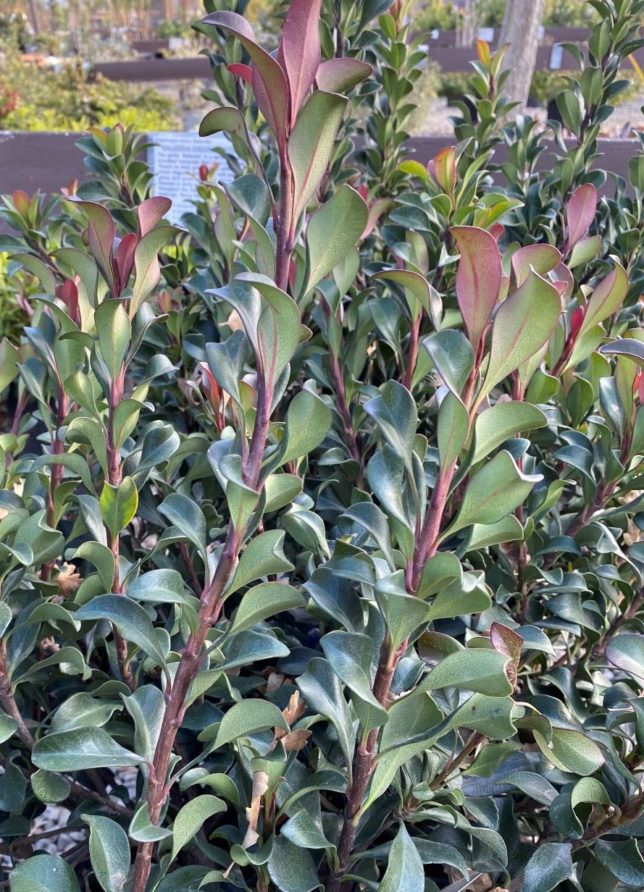
Coprosma repens (Mirror Plant) – The glossy leaves change color as colder weather approaches. Small, inconspicuous blooms in the spring. This hardy evergreen shrub needs protection if the temperatures dip below 25°. (Variety ‘Pina Colada’ is pictured)
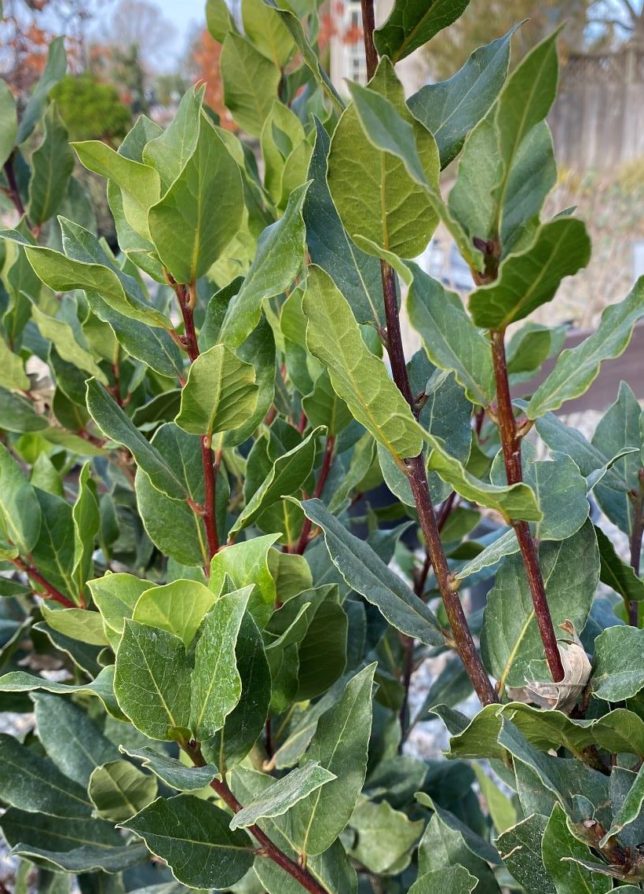
Laurus noblis (Sweet Bay) – An aromatic evergreen available in shrub or tree form. This Mediterranean native is where the “bay leaf” used in cooking for seasoning comes. This can grow into a fairly large plant.
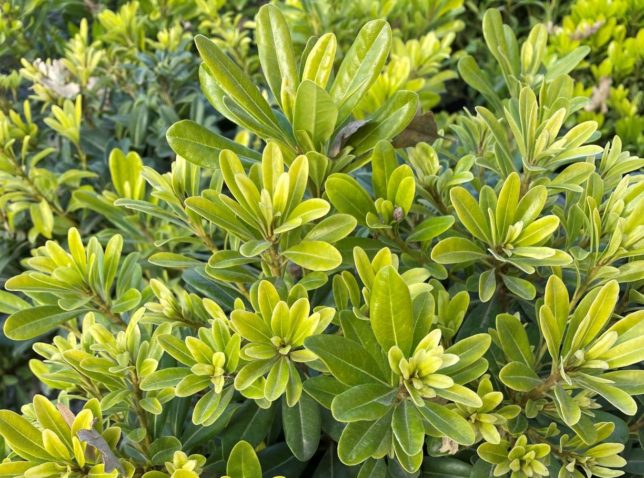
Pittosporum tobira – A popular dwarf shrub that is evergreen and mounding. Good to use as a low boundary or for poolside plantings. (‘Wheeler’s Dwarf’ is a popular variety)
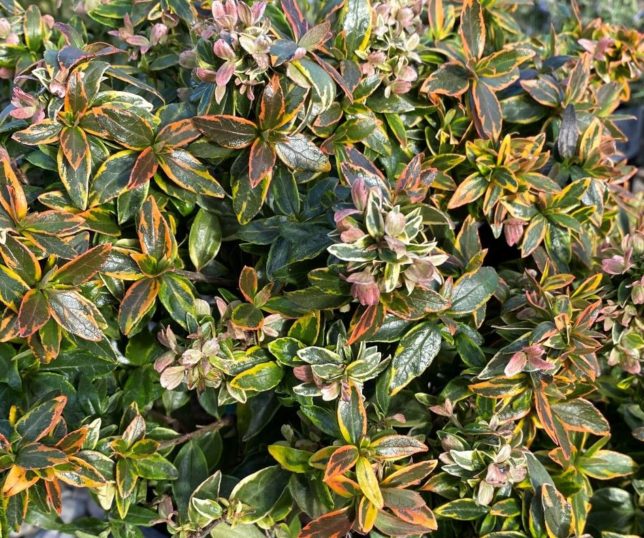
Abelia grandiflora – The Abelia has attractive foliage and gracefully arching branches. The eye-catching leaves (and sometimes the stems!) come in different colors and often change throughout the growing season. When in bloom, the flowers are popular with pollinators. (Variety ‘Kaleidoscope’ is pictured)
Rhaphiolepis indica (Indian Hawthorne) – A spreading, compact broadleaf evergreen that bears deep pink flower in shiny foliage that changes color with the seasons. Berry-like, dark blue fruit follows flowers.
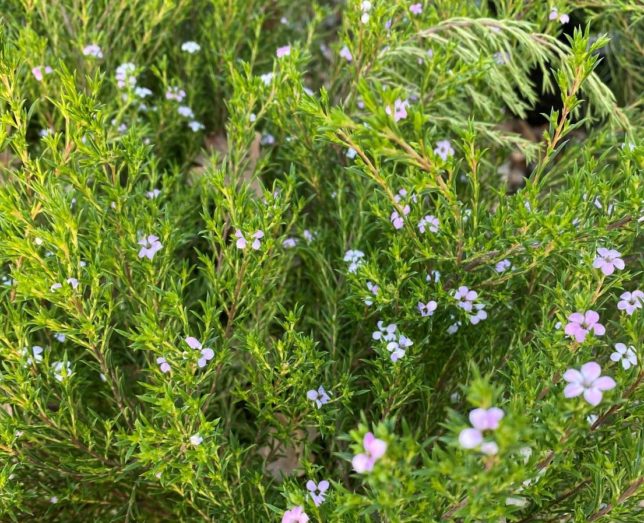
Coleonemapulchrum (Compact Breath of Heaven) – This popular shrub is evergreen, hardy and mounding to about 3′ tall. Small, showy blooms in spring often repeat in fall. If you are looking for a larger shrub (think 6-10′), the non compact Coleonema is an option.
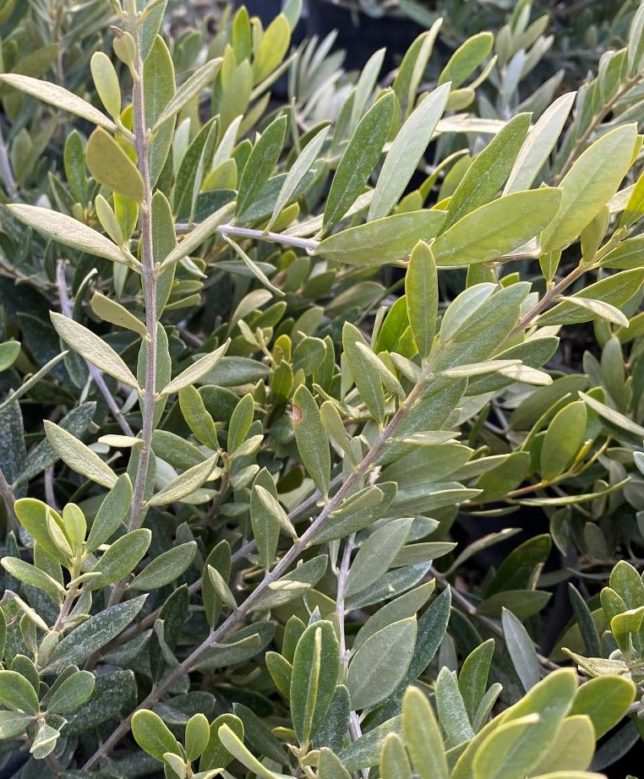
Olea europaea (Little Ollie) – All the beauty of the attractive grayish green leaves without the mess of a fruiting olive. This one can grow large at 5-15′ tall, but can be controlled with pruning. The dense growth is great as a hedge, low screen, accent or small tree.
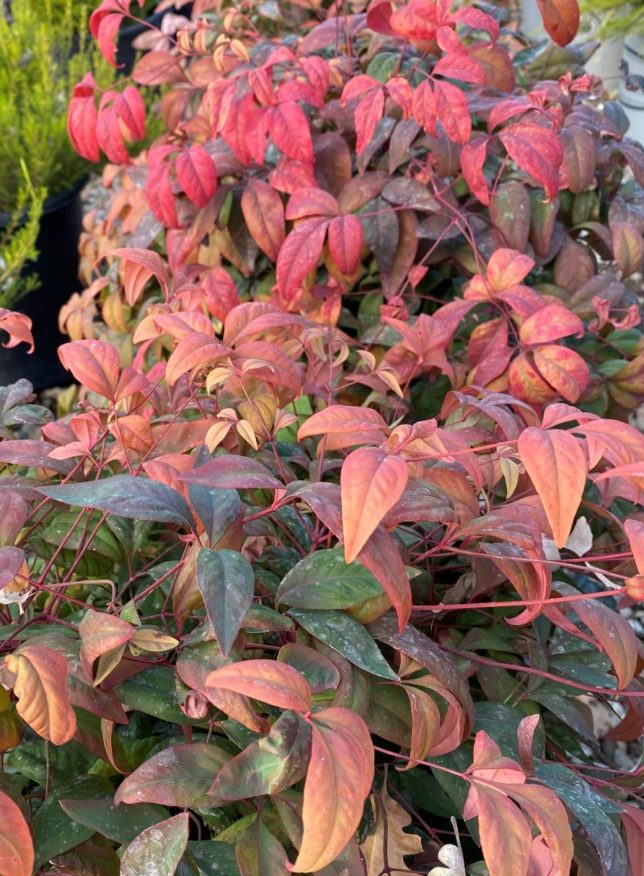
Nandina domestica (Heavenly Bamboo) – In every season this versatile plant is a garden standout. Serves as an excellent accent or container plant. Choose neat mounding or softer upright forms. Make sure the soil is well draining. (‘Firepower’ is a vibrant red variety)
We were enticed to come along by our Cal Poly professor Bob Gordon who did the flowers for our wedding. Bob is a gifted educator and has become a great friend over the years. Bob is passionate about flowers and music so what could be better than to be inspired by this magical floral cruise while supporting the San Luis Obispo Symphony. We will cruise in Holland with stops the Kuekenhof garden to see acres of beautiful blooming bulbs woven into an extraordinary landscape, the once every 10 year Floriade horticultural extravaganza and the Aalsmeer flower auction.
This has always been on my bucket list and I’m so excited to make it happen!
Join the San Luis Obispo Symphony for this springtime river cruise in Holland and Belgium aboard Avalon Waterways. Garden enthusiasts will not want to miss this incredible cruise hosted by Mr. Robert “Bob” Gordon who has arranged a special excursion to see the 2022 Floriade, a once-in-every 10 years International Horticulture Exhibit as well as a visit to see the breathtaking colors of Keukenhof, also known as the “Garden of Europe” and a visit to the World’s Largest Flower Auction in Aalsmeer, Netherlands
The first thing to know is that low-light does not mean NO light. Living plants not are going to grow and thrive in darkness. They need light in order to live, but some plants are better at living with low-light conditions.
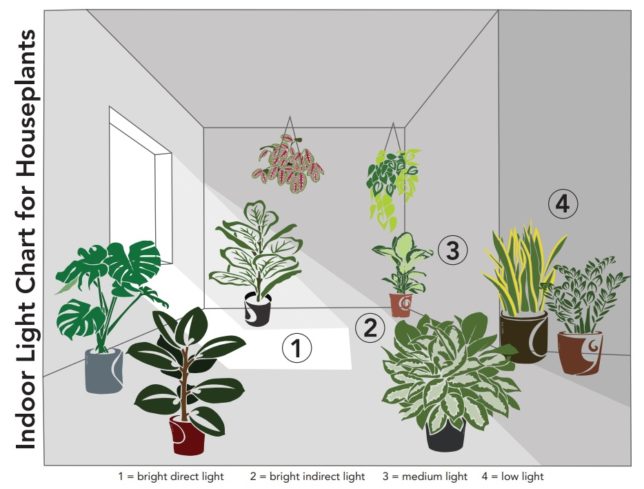
Let’s take a look at where you might find low-light in a room:
Your plants will likely tell you when they need more light. One of the first signs is that they could become long and leggy. Like their sun loving friend the sunflower, they may begin to lean towards the light if there is a window or other available light source (In Italian, the name for sunflowers is ‘girasole’ which literally means turn towards the sun). They may also start to lose their color and/or appear dull.
As we see from the graphic above, most rooms the house get some natural light. It is just a matter of finding those spots and putting the right plant in that space.
It is important to note that plants with lighter foliage colors need more light, so that is a consideration when selecting the right variety for your space. Many of the plant families below are available in a wide range of colors. From deep, dark green to lighter, brighter shades of green and intriguing variegated options. If you are selecting a plant for a truly low-light space, seek the deeper greens and leave the popular variegated options for a lighter spot.
What we want to focus on are those houseplants that can thrive in low-light areas of the average home. They might even begin to suffer if they get too much light (especially direct sunlight!)
Let’s take a look at some top picks for houseplants that will enjoy the lower light areas of your home:
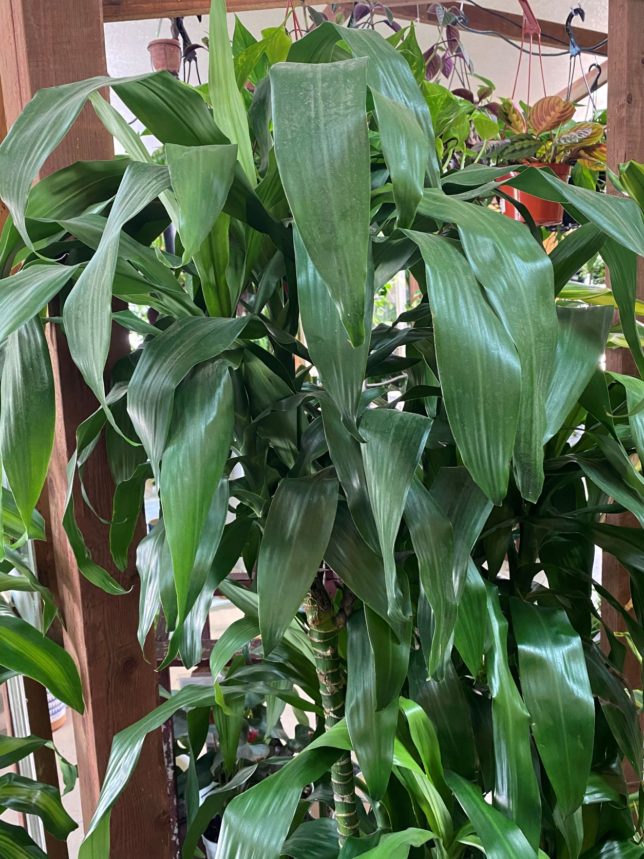
1. DRACAENA
Not only are dracaenas good indoor plants for low-light conditions, they are also beautiful with a spectacular range of color. They make a great statement plant as they can be one of the larger houseplants we carry.
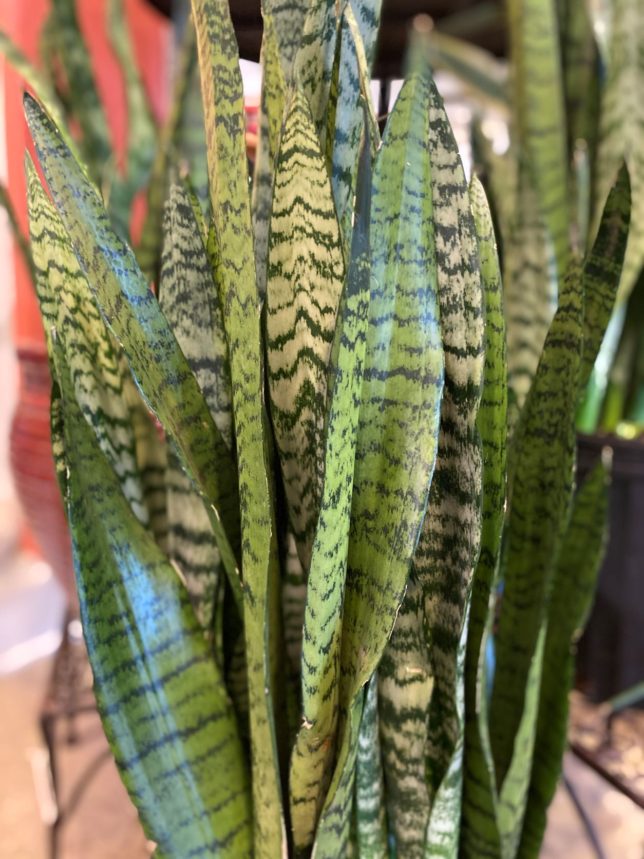
2. SANSEVIERIA
The Sansevieria known by many nicknames (snake plant or mother-in-laws tongue are the most common) remains a favorite at Alden Lane for its low-maintenance personality. Their architectural vertical shape is fun too. You could say that they thrive on a bit of neglect. Only water it when the soil is dry, keep it out of direct sunlight and you can enjoy sansevieria for years to come!
3. ZZ PLANT
Another great plant selection for low-light and low-maintenance houseplants are ZZ plants. Care for your ZZ plant just like you would treat succulents (they are even happy to live in the same pot as a succulent). Keep it out of direct sunlight.
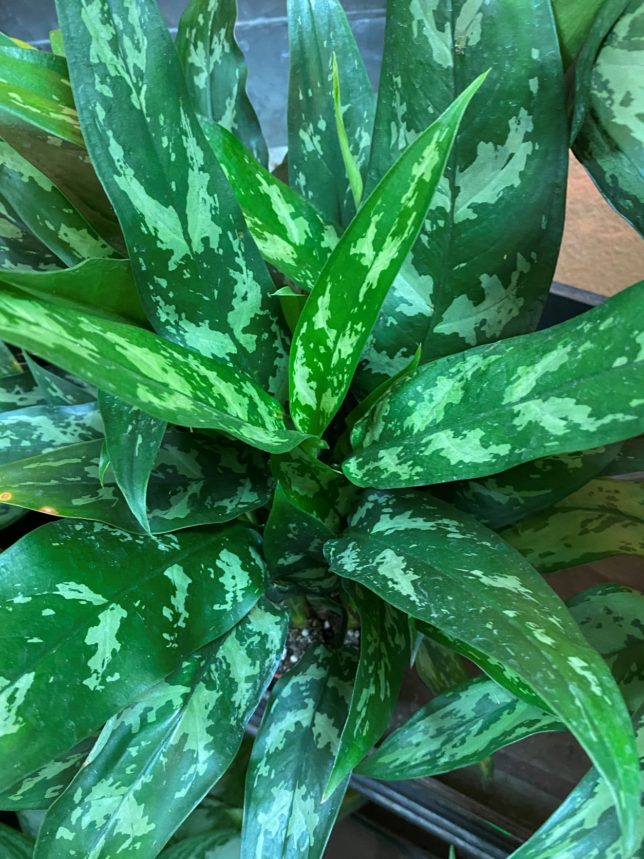
4. CHINESE EVERGREEN (AGLAONEMA)
Another option for a beautiful, low-light and low-maintenance houseplant is the Chinese evergreen. These come in a variety of shades, so you need to veer towards the darkest tones for low-light spaces. After considering light, keep your plant warm and evenly moist. These guys are slow growing so if you are looking for a plant that will not outgrow its pot anytime soon, these are a good option.
5. POTHOS
If you are looking for a low-light houseplant with a trailing habit, consider a Pothos. Perfect for a hanging basket or draped over the side of a bookshelf. Pothos are also particularly resistant to pests. They are also easy to propagate from cuttings if you are looking to share with friends.
6. ASPIDISTRA
Also known as the cast iron plant for its near indestructability. This low-light and low-water is also slow growing so it won’t outgrow the spot you pick for it anytime soon.
Note – Almost all fruit trees, whether on standard or dwarfing rootstocks, are too big for a typical backyard orchard. The easiest, most effective way to keep fruit trees at manageable size (about eight feet high) is by summer pruning.
Standard (15-30 feet at maturity) Betulaefolia – For Asian pears. Very vigorous, tolerates wet soil, dry soil, alkaline soil. Resists pear decline. More vigorous than Calleryana, and more winter hardy. Unpruned trees 15′-25′ at maturity.
Calleryana – For flowering pears and Asian pears. Preferred rootstock for warm winter/hot summer climates and for sandy soils. Also adapted to wet soils. Asian pear varieties slightly dwarfed (90%), bear heavily at young age.
Domestic Apple/Standard Apple – Most rugged rootstock for apples. Vigorous, deep-rooted, cold-hardy. Tolerates wet soil, dry soil, poor soil. Unpruned tree height of standard varieties 18′ to 30 feet. Trees on apple seedling may be held to any desired height by summer pruning.
Lovell – More tolerant of wet soils than Nemaguard. Also more cold hardy. Susceptible to nematodes in sandy soils. For plums, peaches, nectarines, apricots, prunes, almond.
M-111 – Excellent all-around rootstock for apples. Induces early and heavy bearing. Tolerates wet soil, dry soil, poor soil. Resists woolly apple aphids and collar rot. Trees dwarfed to 85%.
Mahaleb – The most winter hardy of the commonly used cherry rootstocks. Sweet cherries slightly dwarfed, no dwarfing effect on sour types. Induces early, heavy bearing. Resists crown gall, bacterial canker, some nematodes. Not tolerant of wet soils.
Mazzard – Standard rootstock for sweet cherries. Vigorous, more tolerant of wet soils than Mahaleb (but good drainage still required). Resistant to root-knot nematodes and oak-root fungus.
Myrobalan 29C – Shallow but vigorous root system. Tolerates wet soils. Immune to root-knot nematodes, some resistance to oak-root fungus. Trees reach larger size compared to Marianna 26-24. For apricots, plums, most almonds.
Nemaguard – Vigorous, resists root-knot nematode. Excellent for well-drained soils. In poorly-drained soil, plant on a hill. For nectarines, apricots, plums, prunes, almonds.
Domestic Pear Seedling – For European & hybrid pears. Vigorous, relatively tolerant of wet soils. Resistant to oak-root fungus. Long-lived trees reach 20-25 feet.
Semi-Dwarf (8-25 feet at maturity) Citation – Peaches and nectarines dwarfed to 8 to 14 feet. Apricots and plums dwarfed to 3/4 of standard. Very tolerant of wet soil, induces early dormancy in dry soil. Very winter hardy. Resists root-knot nematodes. Trees bear at young age. Pat. No. 5112. (Zaiger)
Maxma – For sweet cherries. In heavy soils, trees dwarfed to 12′-15′. Resistant to bacterial canker. Relatively tolerant of wet soils (good drainage still required). Trees begin bearing at young age.
OHXF333 – European & Asian pears on this rootstock are dwarfed to about 2/3 the size of standard (about 12-18′ if not pruned). Widely adapted, disease resistant. Trees on this may be held to any desired height by summer pruning.
M-7 & M-7A – Dwarfs to 65% of standard. Induces early and heavy bearing. Resistant to fireblight, powdery mildew, moderately resistant to collar rot. Good anchorage. Very winter hardy, widely adapted. Prone to suckering.
Marianna 26-24 – Shallow root system, much more tolerant of wet soils than Lovell or Nemaguard. Resistant to oak-root fungus, root-knot nematodes. Mature trees comparatively small. For apricots, plums, most almonds.
Dwarf or Miniature (4-12 feet at maturity) Geneva 969 – Extremely dwarfing rootstock for apples. Trees Dwarfed to 8 to 10 feet. Ideal for high density planting, small spaces in garden, tub growing. Induces early and heavy bearing. Small root system, young trees may need staking. Good for container growing.
Zaiger Dwarf/Newroot 1 – Dwarfing rootstock for cherries. Dwarf trees 8 to 12 feet unpruned. Ideal for container growing. Promotes early bearing.
Flowering vines offer a lot of bang for your buck. Several vines display tropical colors throughout the summer and even into our fall. A few are showing their beautiful summer color now.
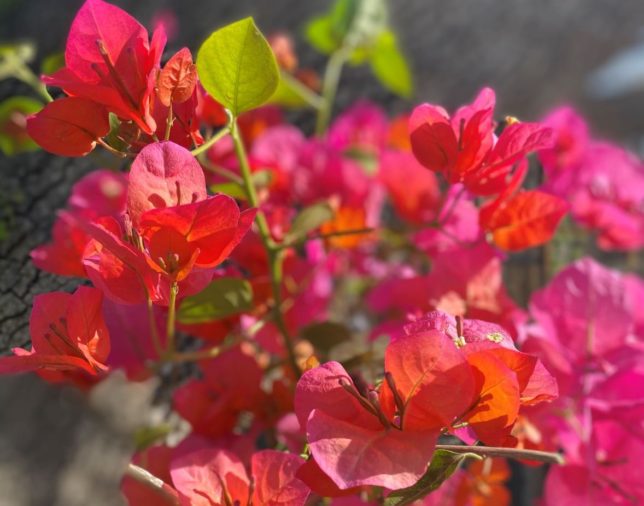
Bougainvillea
These evergreen summer bloomers are stunners. Their hot pink, coral, crimson or purple “flowers” are actually modified leaves called bracts. They can be a particularly showy addition to your yard. They are somewhat frost sensitive so they may need protection if we get a particularly cold winter (under 30 degrees).
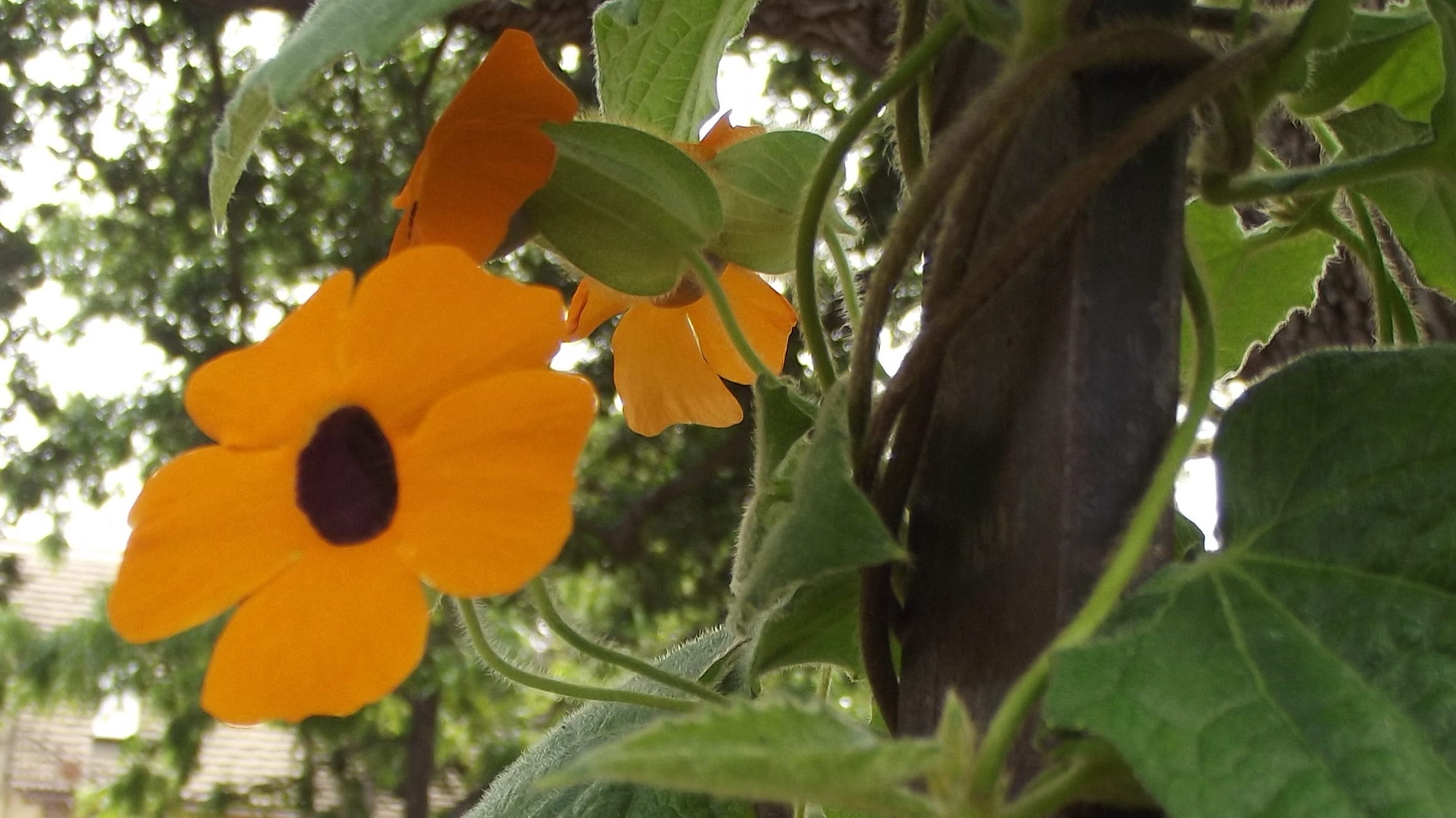
Black-eyed Susan Vine
Black-eyed Susan vine and a few of its cousins bloom all summer, mostly orange or yellow in color, often with a black eye. Plant it in a sunny spot and expect to give it some frost protection.
Bower Vine
Bower Vine is an evergreen climber with large white trumpet flowers that bare a pink throat June into October. Perfect in morning sun or light shade.
Trumpet Creeper
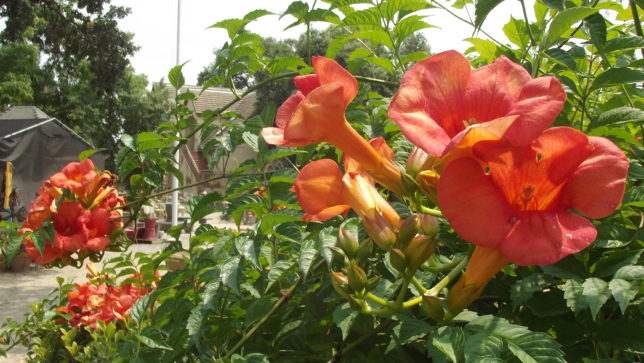
Often blooming this month in the vine section now and also along our southern fence, Campsis radicans, or Trumpet creeper lends a tropical flair to any sunny garden. We have three colors to choose from, yellow or orange or red.
Mandevilla
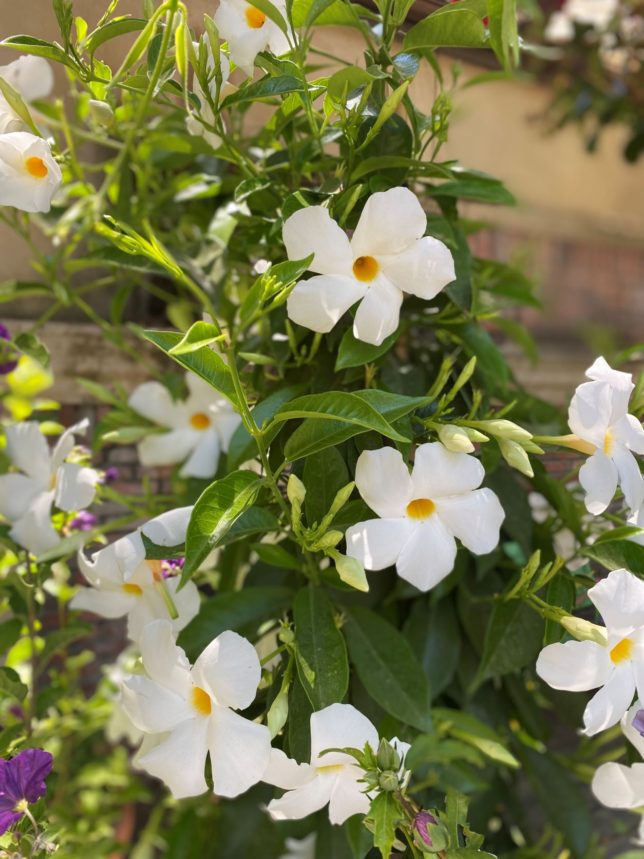
Mandevilla offers a tropical feel with an infusion of brilliant color – red, pink or white. You can provide a simple trellis or other structure upon which to climb and your mandevilla will do the rest. Regular dead-heading will repay you with a continual profusion of fragrant blooms and vines from early spring into fall.
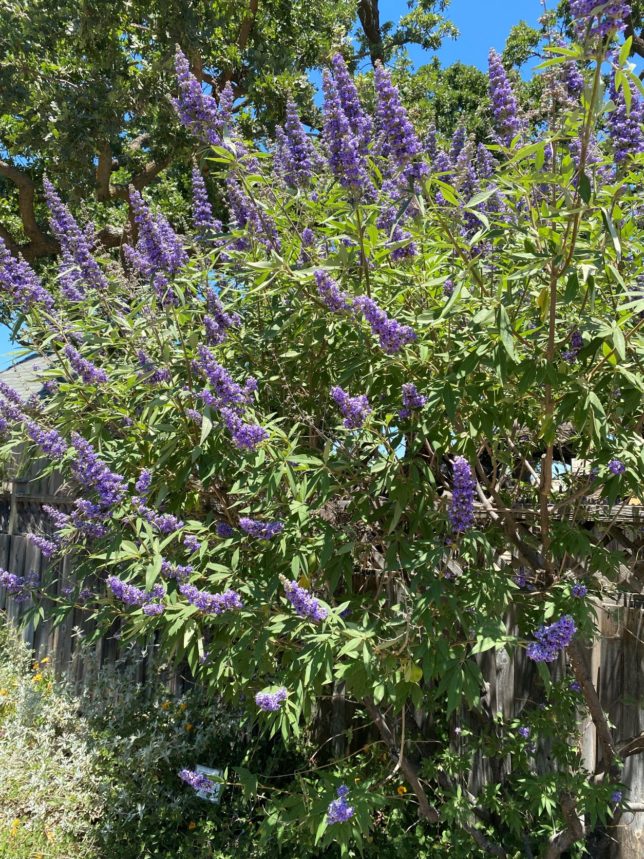
Also blooming at Alden Lane this week, our Chaste tree.






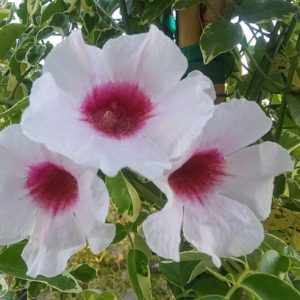 Bower Vine is an evergreen climber with large white trumpet flowers that bare a pink throat June into October. Perfect in morning sun or light shade.