10 Last Minute Gift Ideas

Alden Lane Nursery is the perfect place to visit for your last minute gift needs. We have gifts for gardeners experienced and novice! Take a look at some interesting options.

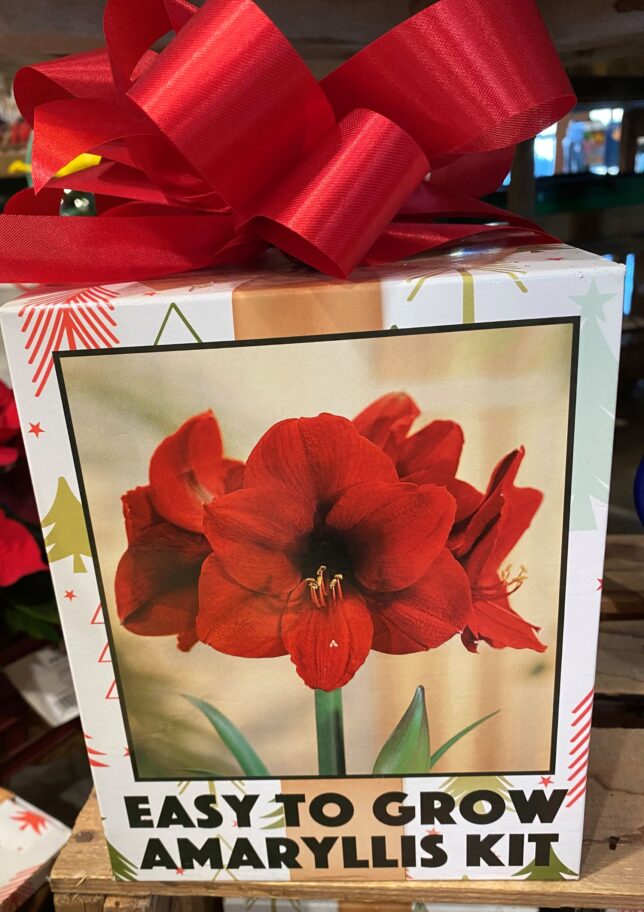
1. Amaryllis Kit

Ready to go for the gardener and non- gardener alike. Grows easily indoors.
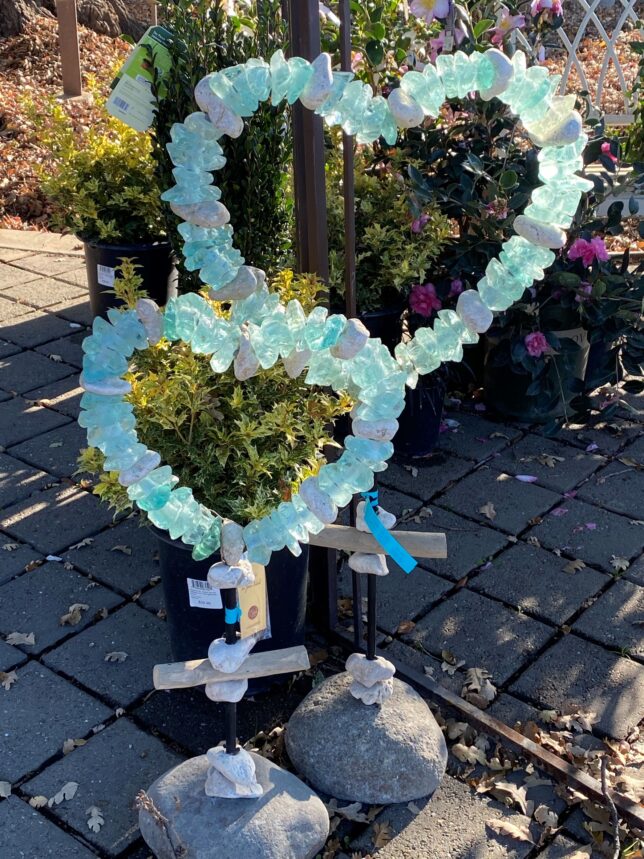
2. Seaglass & Stone Garden Art

Sometimes you need to add a little art to the yard in addition to your wonderful plant “collection”.

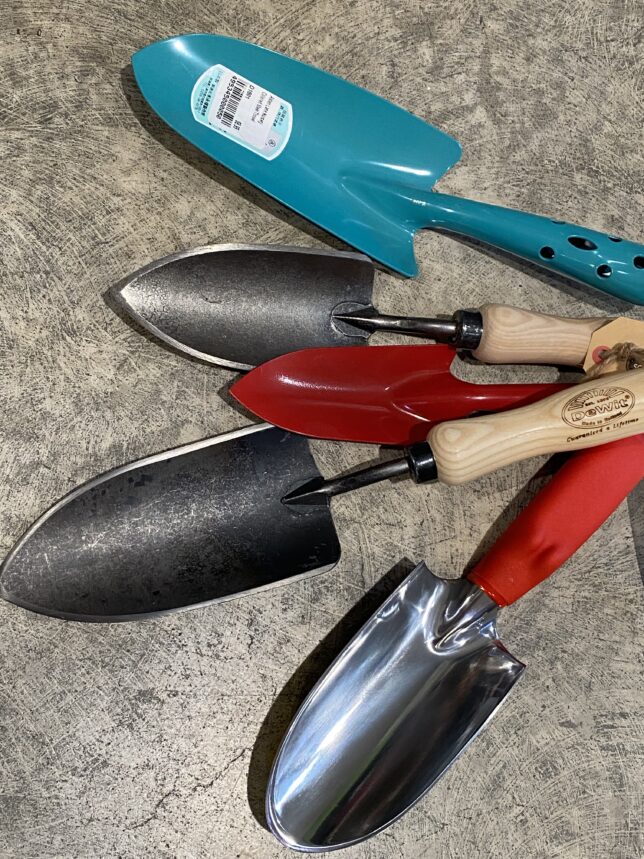
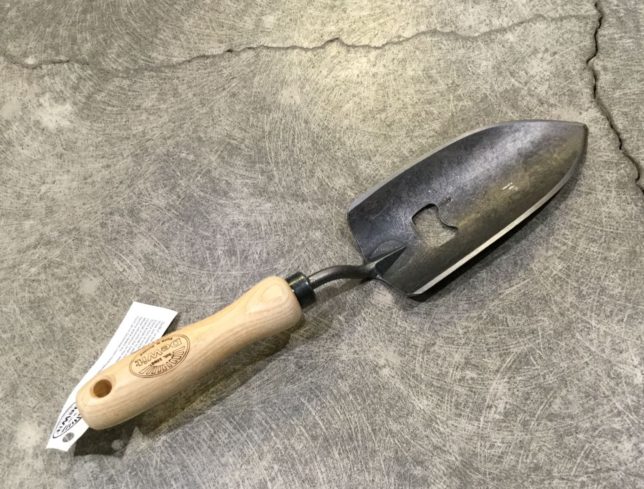
3. Garden Tools

We have a great selection of handheld garden tools for every need!
4. Garden Decor

We have fun garden sculptures if you are looking to give some “character”.

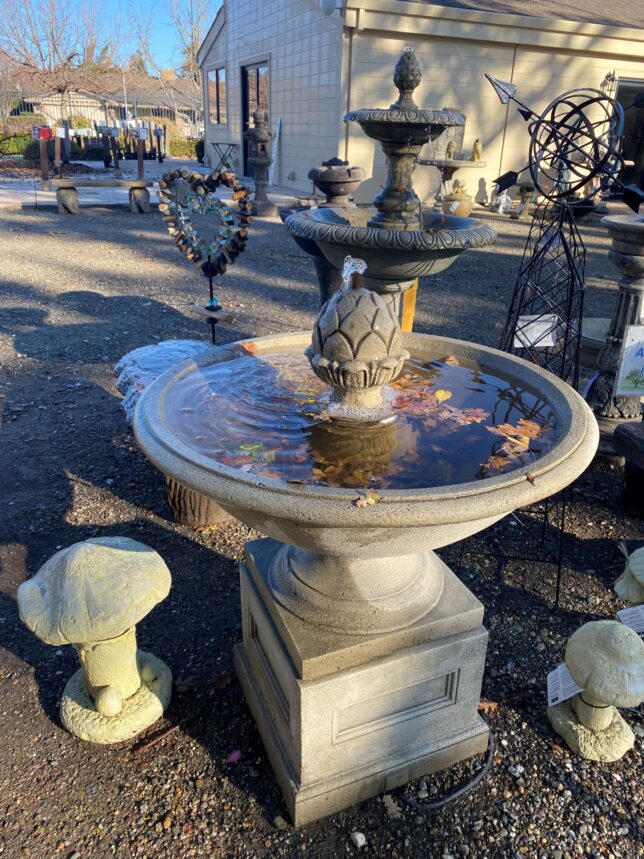
5. Fountains

We have fountains for indoors and outdoors. The sound of water is always a soothing addition.
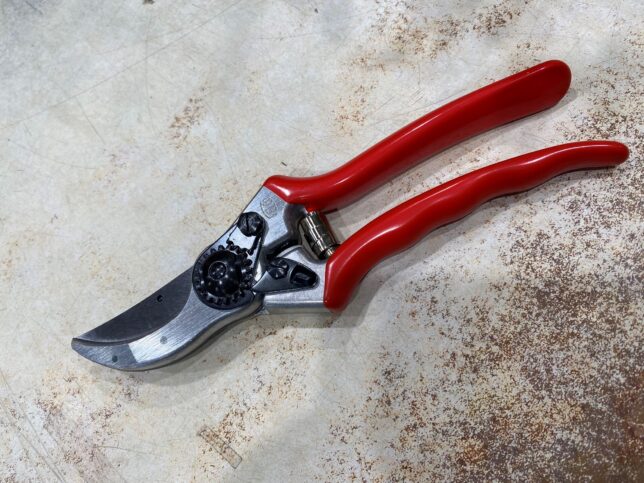
6. Felco Pruners

Felco tools feature ergonomic handles & stainless steel cutting blades. Swiss precision makes snipping & pruning a breeze!

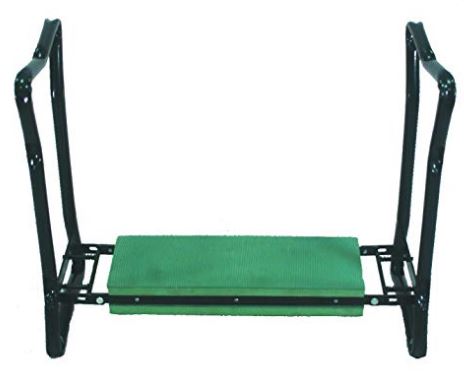
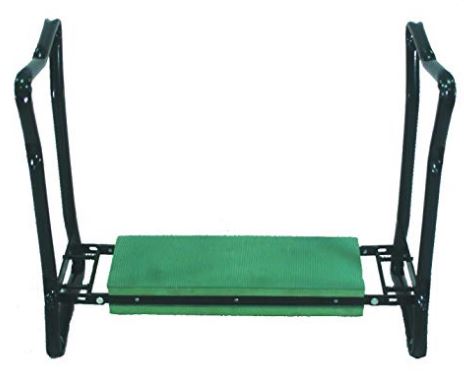
7. Foldable Kneeler Seat

Easily flips from kneeler to padded bench. Long handles give an assist to getting off the ground.
8. Meyer Lemon

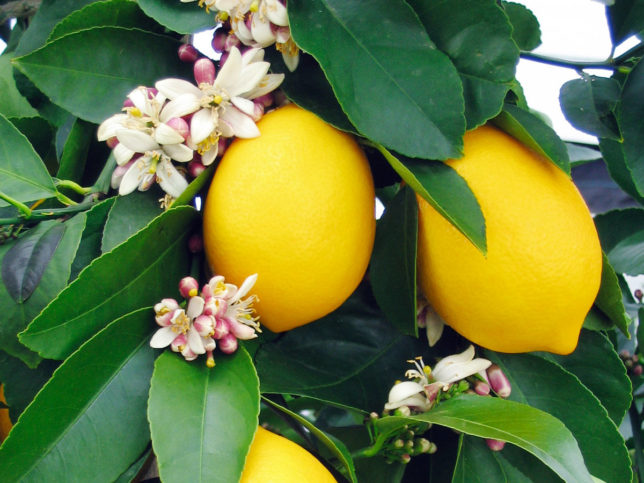
There is nothing like the ability to pluck fresh citrus from your own garden. Meyer lemons are a favorite!

9. Gourmet Goodies

Enjoy now, plant later! We have a wonderful selection of gourmet jams & sauces. Maybe you will enjoy one so much, you decide to add a plant or tree to your garden, so you have your favorite fruits direct from your yard!


10. Alden Lane Gift Card

Not sure what to get? Give an Alden Lane Gift Card for a gift that is sure to please.
It’s Not too Late – Plant Your Fall Bulbs

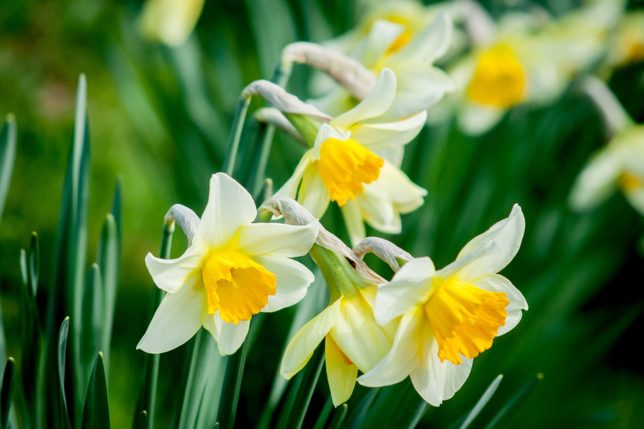
Think spring now! It is not too late to plant your spring bulbs.

Consider planting bulbs in containers. This is a great way to accent your porch or patio. When they are finished blooming you can then relocate them to a side yard where they can continue to be watered and nurtured allowing them to dry down naturally. It’s important that the bulb is allowed to reabsorb all the energy of the leaves before they rest in summer.

Add another dimension to your bulb pot or garden by planting a blooming blanket of flowers over the top. Here are some great double deck combinations: yellow daffodils and dark blue/purple pansies; peach tulips and light blue forget-me-nots; white tulips and pastel yellow pansies; red tulips, white paludosum daisies with blue pansies.

Most bulbs are planted point up, but when in doubt, plant sideways! Our nursery professionals will show you what’s up and what’s down.

Choose bulbs that will provide a succession of bloom. There are varieties of tulips, daffodils, narcissus, and iris that will provide early, mid, or late spring bloom. 

The layered look not only works in fashion but in the garden too. In a pot or garden bed plant bulbs in layers to produce a mixed bouquet look. Bulbs are planted 2½ times their diameter deep. So plant the larger bulbs, like daffodils deep. Over the top of daffodils plant tulips, then freesia and finally grape hyacinths.

You can even layer the same kind of bulb. For instance plant all daffodils some at the recommended depth of 6-8″ and another layer at 4″.  The shallower ones will bloom first and the deeper later.

The Gift Guide

We carry a wonderful selection of gifts for any occasion. During the holidays, we add even more unique items for you to consider. Some of these items are located in the Garden Store with our Christmas Shoppe.

Here are a few of our favorites:

Wind Chimes – Wind chimes are a gift that can be enjoyed by everyone, but you may not think to buy yourself. Many sounds and styles available.


Wall Art – We have a variety of wall art for indoors and outdoors in different mediums including wood, metal & canvas. Themes include trendy farmhouse, inspirational quotes and gorgeous botanicals. Some of it is on sale!

Gourmet Products – Another great gift idea for many to enjoy are some of our wonderful gourmet goodies. Soup, desserts, olive oil, honey, and candy galore. We would be happy to help you put together a selection to make a basket.

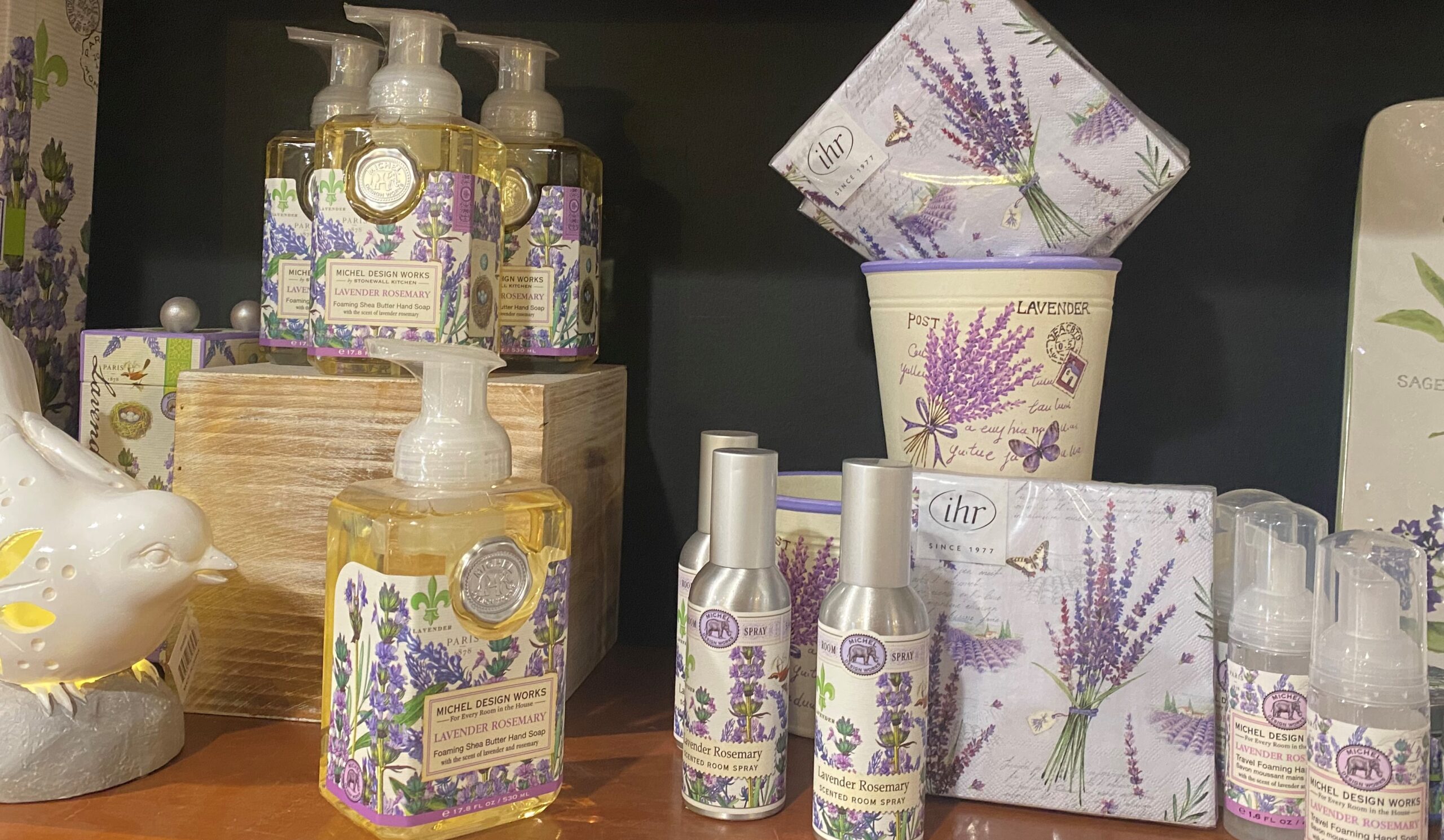
Lotions & Soaps – Always a welcome gift available in a wide variety of scents. We have lavender, lemon, grapefruit just to name a few scents.

Kid’s Section – If you are looking to inspire the next generation of gardeners, we have tools that are just their size. We also have some unique toys and plush animals.

Books – We can help you out with a nicely curated selection of gardening & plant books.

Garden Flags & Doormats – If you are looking to add a splash of color to your front porch or yard, consider a flag or bright doormat. We have some fun ones!

Bird Feeders – Give someone a gift that will attract feathered friends into their yard. Our assortment of styles, sizes & food options is sure to ruffle your feathers.

Garden Decor – We have all sorts of fun things to which can be the perfect addition to a yard or patio.

We are happy to help you select the right thing for everyone on your list. The best part is that we are happy to gift wrap your items in our signature wrapping for FREE.

Gift Ideas for the Gardener

We have lots of gift ideas for the gardener including some unique tools gardeners may not be aware of that others cherish. Buy a gift a gardener might too lavish for him or herself but will ease the tasks and leave them thanking you.

Hori-Hori Knife

Discover one of the most useful tools in a gardener’s toolbag. The Japanese Hor-Hori knife is part spade, part serrated knife. Excellent for dividing perennials and squeezing a new plant in an established pot. Those gardeners who own one, swear they are their most useful tool.

Felco Tools

Felcos are well-made Swiss made pruners. They are simply the best! They are the pruner of choice for landscape & vineyard professionals. Give a Felco tool to a gardener and expect them to be astonished.


Garden Kneelers

A folding kneeler serves as a seat too. One of our more popular gardener gifts. Makes gardening tasks more comfortable and enables greater mobility.


 Trowels

Pick a trowel, any trowel. Every gardener has their personal favorite, and we have a great selection to choose from. Consider a soft handle for comfort.

Buy a Book!

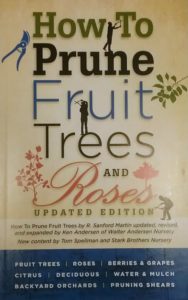
We have a wonderful selection of books for experienced and new gardeners alike Learn to Prune – One of the most comprehensive, easy to understand pruning books in out there. This is our most popular selling book, explains in easy terms with illustrations, how to prune a large variety of fruit trees and roses.

We also have Livermore specific books including Livermore history and local family cookbooks.

Dormant Spray to Protect Your Fruit Trees Starts in Fall

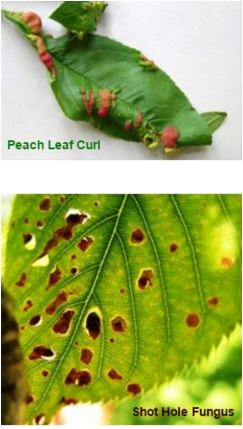
Preventative Spraying Program Begins Late Fall! Thanksgiving signals the time to start dormant spray for fruit trees.  Especially for the prevention of Shot Hole Fungus and Peach Leaf Curl!!  Even before trees are leafless in winter, they benefit from applications of disease control products.

Thanksgiving, New Year’s and Valentine’s Day are holidays around which you should consider treating.

The first spraying should be just prior to or at leaf fall (about the first freeze of winter). A second spraying one week later helps ensure complete coverage. The plants’ bark contracts with the onset of cold weather sealing in disease-causing organisms such as shot hole fungus and peach leaf curl. It is, therefore, essential to spray before heavy frost or freezing weather sets in.

Spray with Bonide Liquid Copper Fungicide or Monterey Liqui-Cop. If rains occur within 48 hours of applying, reapply spray.

Clean Up Your Garden

Debris will harbor insects and diseases. A good general garden clean-up, removing leaves, spent flower heads, old fruits, nuts, dead and broken branches eliminates insect and disease hiding places. Although a potential problem in the garden, these materials are perfect candidates for the compost pile as long as your compost pile generates sufficient heat to kill insects, their eggs, and diseases. For more information, visit www.stopwaste.org

Winter Care for Houseplants

Houseplants, just like people, need to adjust to winter conditions. Without making some seasonal changes, our houseplants may begin to look unhealthy. Visible symptoms include sudden leaf loss, leaf tips turning brown, and a generally droopy or wilted appearance.

Reduce Watering

Houseplants experience a slower rate of growth during the cold weather, and some even go completely dormant. Because of this, they need a little less water during the winter months. Allow your plants soil to dry out more than usual during this time. The top surface soil might appear dry, but you should poke your finger into the soil and check to see if it is dry an inch or two below the surface.

Increase Humidity

The humidity level in heated homes can drop 10-20% in winter, and houseplants prefer a level closer to 50%. If you have a humidifier, move your plants to a spot nearby. If you don’t have a humidifier, there are other ways to increase the humidity around your houseplants. The bathroom is often a great spot for plants since they can absorb the humidity from warm showers. You can also place your plant on a tray of pebbles and water (making sure the water is below the rock surface so the plants do not end up sitting in water). The evaporating water from the tray will be absorbed by the plant on top!

Watch the Temperature

Windows can get chilly in the winter time, so it’s best to move your plants away from them. Additionally, you should make sure to move your plants away from doors that might bring in a cold draft. Be careful not to put your plants near a hot vent or other sources of heat. Fluctuations in temperature can kill houseplants just as easily as prolonged periods of heat or cold.

Increase Light

There are fewer daylight hours during the winter months. You may need to relocate your houseplants to a brighter spot or even add supplemental grow lights. A good spot would be a south or west facing window that remains sunny all day. Additionally, you’ll want to hold off on fertilizing during these months. Feeding your plants will upset their natural cycle, so wait until spring before fertilizing again.

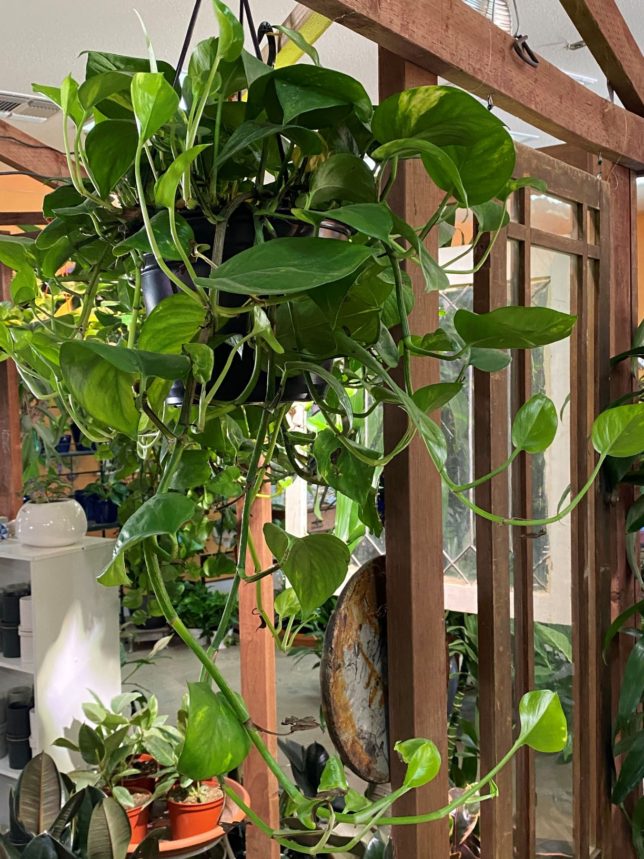
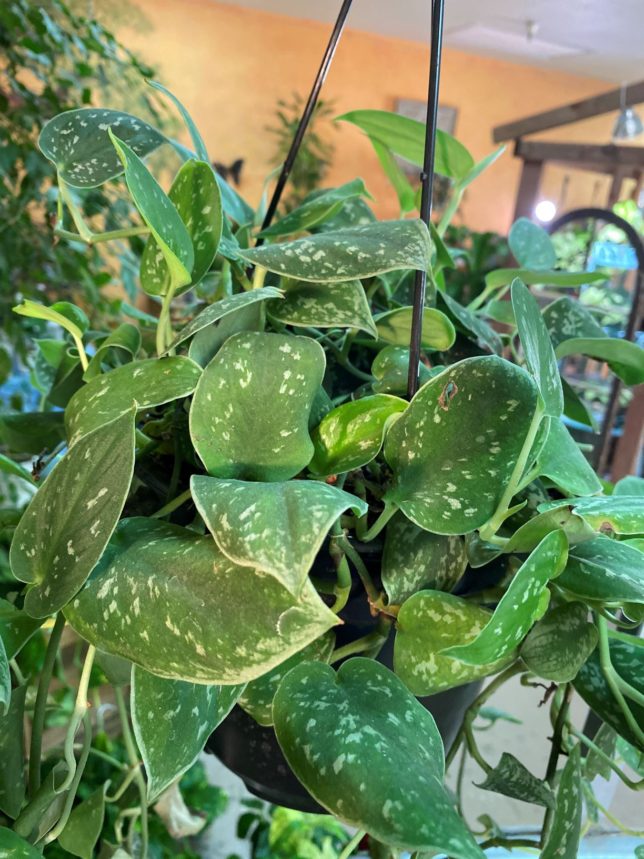
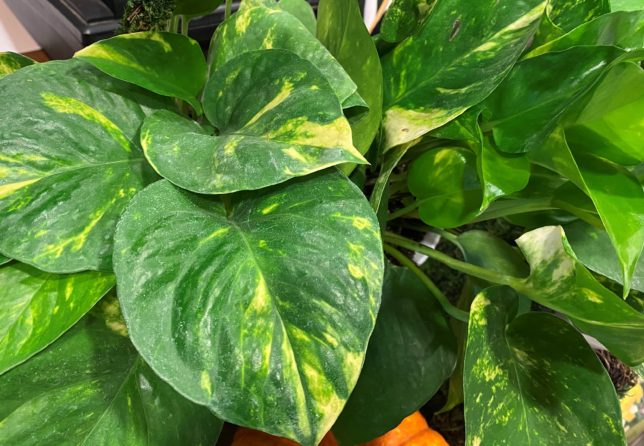
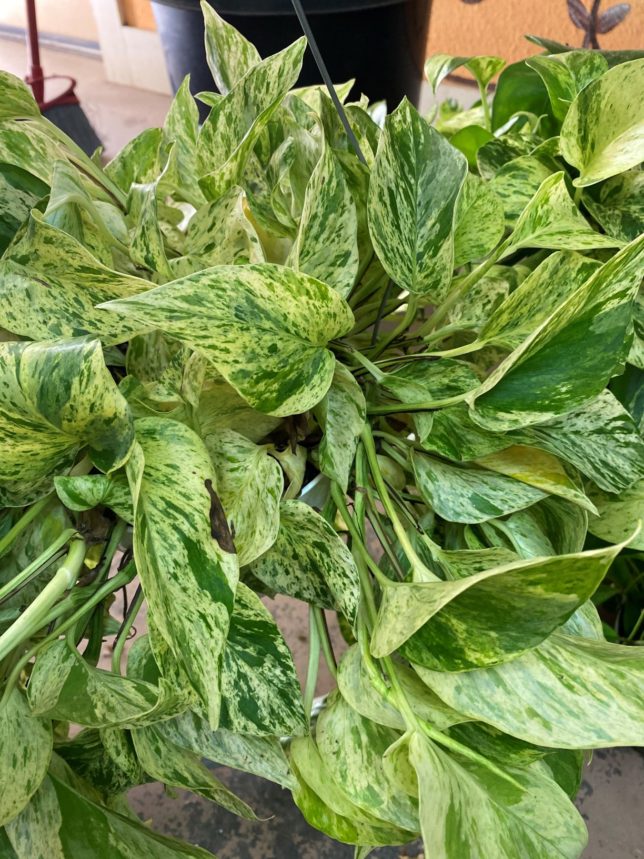
Join the Pothos Party

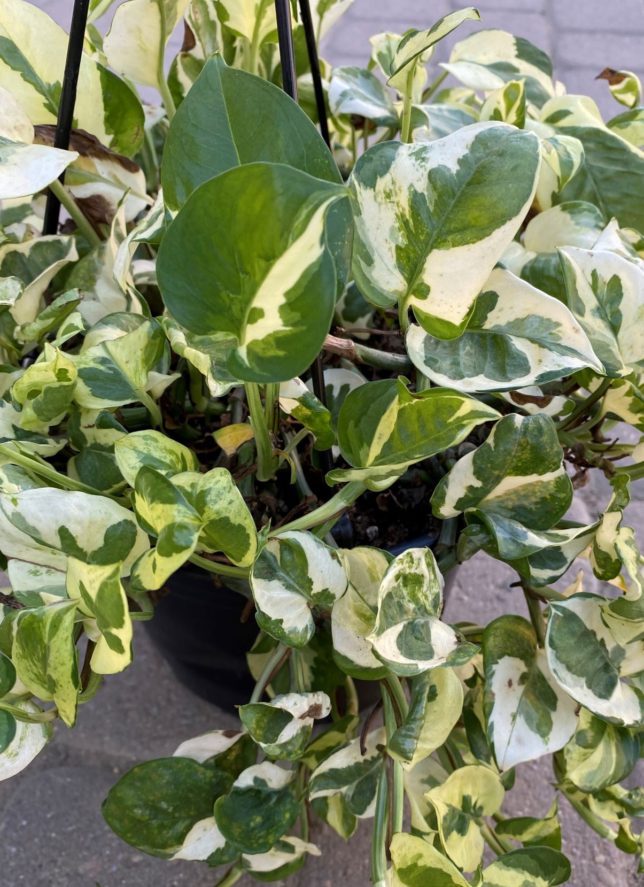
Pothos (Epipremnum aureum)

If you are looking to dip your feet in the houseplant world, a pothos would be a good start. Pothos are easy care and undemanding. This lovely vining plant is a fun way to add a variety of different green shades to your home. Pothos come in a wide range of colors – variations of green, yellow & white.

Pothos tolerate a wide range of environments. They can do well in bright indirect light (just be careful to keep them out of direct sunlight!) as well as low light. If you choose a highly variegated they may not grow as well in low light. A good rule of thumb is the lighter the colors, the more light they require. They could lose their variegation if the light is too low.

Pothos will thrive in nutrient rich soil, but have been known to do almost as well in nutrient poor soil. You can opt to fertilize your pothos plant every few months (about 4x per year). This will help the plant grow more quickly. One of the great things about pothos is that they grow fairly quickly!

While pothos plants are an easy to care for houseplant, you should be aware that they are considered toxic. Some people experience skin irritation on contact with the sap. Keep pothos out of reach of cats, dogs and children.

Putting Down Roots ~ “ro0T dowN”

By: Nancy McNeish

The coming chilly weather inspires us to cozy-up in our homes and “root down” indoors. It’s’ also the ideal time to get outside and establish the permanent plantings that form the framework of our landscape design. Trees, shrubs, and California natives planted now will grace your yard for years to come. Now is the ideal time for planting; the soil is still summer-warmed, the air temperatures will cool in the weeks ahead, and winter rains will eventually roll in and nurture your new landscape

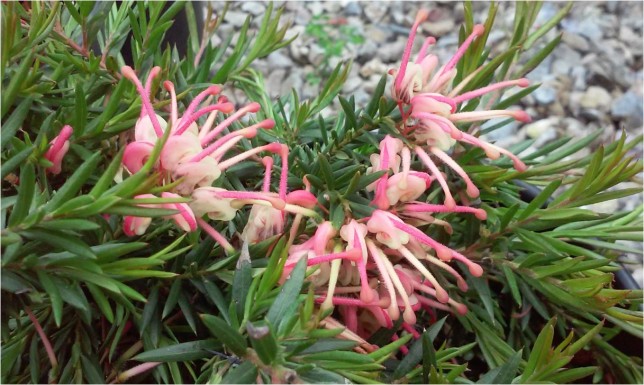
Grevillea – from down under, a whole range of heat lovers bloom in shades of coral – irresistible to hummingbirds

Healthy roots growing below ground mean lush leaves, flowers, and fruits growing skyward. A tree’s roots can be 18″ to 24″ or more below ground, where they absorb water, nutrients, and oxygen. Yes, roots breathe too! Roots may spread out to the width of the tree canopy, or even well beyond. They continue to grow all winter, even after the leaves fall.

Now’s the time to dig in and prepare your planting areas to make the most of this season. Root down a few of these:

Trees

  • Maples: ‘October Glory’ and ‘Red Sunset’; possess vivid oranges, reds, and scarlet fall colors.
  • Chinese Pistache ‘Keith Davey’ shows off brilliant scarlet fall color and no berries.
  • Evergreens include Bay Laurel, Camphor Tree, and Tristania ‘Elegant.’ 
  • Spring flowers options include weeping cherry, ­magenta flowering Redbuds or crabapple.

Shrubs

  • Camellias: ‘White Doves’ is white, ‘Taylor’s Perfection’ is light pink, and ‘Yuletide’ is cheery red as well as early-to-bloom.
  • Azaleas: ‘Happy Days’ is violet purple and ‘Formosa’ are magenta.
  • Grevilleas: ‘Mt. Tamboritha’ has pink colored flowers, ‘Coastal Gem’ has red blossoms that Hummingbirds love.
  • Leucadendron ‘Yellow Top’ has yellow bracts, and ‘Red Gem’ has red bracts.

California Natives

  • Manzanitas
  • California Wild Lilac
  • Salvias
  • Toyon and Coffee Berry

Let’s start “Putting Down Roots.”

Native Intelligence

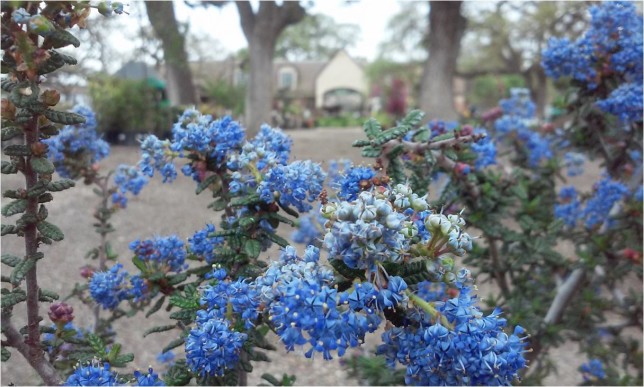
California Wild Lilac (Ceanothus sp.) – spring blooms in shades of blue attract pollinators and provide homes for butterfly larvae.

An Occasional Look at Some of Our Hard-Working California Native Plants

Whats so smart about adding California native plants to your landscape? The simple answer is the delightful experience of growing a tree, shrub or perennial that gives back in so many ways. The sight of a flock of Cedar Waxwings feasting on Toyon Berries. Screaming orange California Poppies peppering the roadside. The summer surprise of big pink and purple orchid-like flowers blooming on a desert willow. A cold hummingbird is enjoying a sip of nectar from a February blooming manzanita. After you fall in love with these plants for who they are and what they bring to your garden, you’ll appreciate their good looks and practicality, thriving with whatever nature throws at them – hot, dry summers and cold, sometimes rainy winters. Here’s a focus on small native trees, usually grown with a multi-trunk form:

Western Redbud Cercis occidentalis – Beauty in every season, from the showy pink flowers clinging tightly to bare branches in spring, to the pretty heart-shaped leaves which turn a rich yellow in the fall. Currently out of stock.

Ray Hartman Ceanothus Ceanothus ‘Ray Hartman’ – Grow this as a single trunk tree, or plant it as a shrub and sculpt it into an attractive, purple-blue flowered evergreen tree.

Desert Willow Chilopsis linearis – Long narrow willow-like leaves belie the water sipping nature of this small tree. Pick one with the flower color you prefer, from pale pink to deeper burgundy, purple or two tones. Enjoy the flowers as much as hummingbirds do. Currently out of stock.

Manzanita Arctostaphylos ‘Dr. Hurd’, ‘Emerald Carpet’ or ‘Howard McMinn – Manzanita are a diverse group of plants known for their unique colored bark and twisty branches. With over 40 varieties native to California, you are sure to find the right one for your space.

“Under the Influence” of Plants

With all the crazy in the world around us, we are lucky to be here every day at the Nursery surrounded by plants. As we have mentioned, there are so many benefits to adding plants to your interior or spending time outside in nature. Let’s take a look at some of the benefits.

Concentration & Memory
Being around plants has been shown in multiple studies to improve concentration and memory. People who are around nature performed better and with greater accuracy. Attention span and memory performance can benefit by being in a natural environment which helps to successfully complete tasks.


Plants and Flowers Generate Happiness
It goes without saying that having plants and flowers around improves people’s moods. That’s why we send them to our friends in the hospital! The natural aesthetic is soothing and reduces stress levels. When stress levels are lowered, your positive energy and outlook grow. They offer pleasing visual stimulation and an increase in perceived happiness which helps improve overall mental health.

Health & Recreation
Being inspired by your natural surroundings can increase desire to move. Your body and mind benefit from continued movement and physical activity. Increase physical activity makes you less susceptible to physical ailments and more resilient when a minor illness comes along. The soothing powers of just seeing plants help you heal more quickly when illness does occur.

Improved Relationships
People who spend time taking care of plants are more likely to have better relationships with others. Taking time to think of someone or something and their needs instead of your own develops compassion and empathy. Extended contact with nature encourages people to want to better their environment and the people in it.

We would love to help you find a way to be “under the influence” of plants.