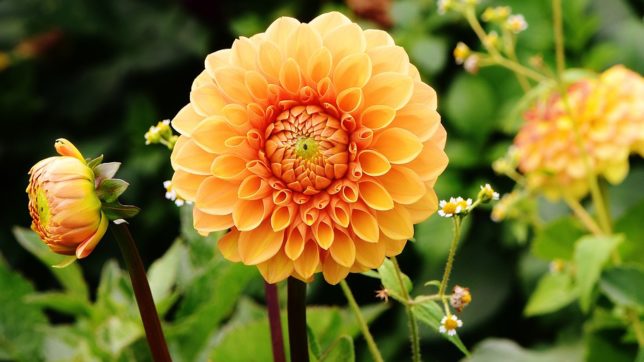
Dahlia Tubers Now In Stock

Spring bulbs are here now and more are coming in the weeks ahead. These include corms, tubers, and rhizomes for most of the summer blooming flowers such as gladiolus and dahlias.

Dahlias are beautiful because they are bright and often very large and have the added benefit of attracting pollinators. They also have a long blooming season and make an ideal, long-lasting cut flower. 

This beautiful sun-loving perennial bloomer is the official flower of the City of Seattle and also the national flower of Mexico. We have sought out Dahlias in a wide variety of heights and forms to suit any garden or landscaping theme.

Plant large dahlias 3 to 4 feet apart; plant smaller dahlias 2 feet apart. Plant dahlias in a spot in the garden with full sun or morning sun. Give them soil that drains well. Select tubers now and plant them as the ground begins to warm in spring (store in a cool spot until ready).

Planting
Dig a big hole, 8-10″ deep and improve the soil with a generous amount of Gold Rush soil amendment. Add and mix in Master Nursery Bone Meal in the bottom of the hole and plant the bulb (actually a tuber) on their side, 4″ deep with the cut stem, if visible facing up. Nurture them with water and an additional feeding of Rose & Flower Food as the buds form in summer and also feed monthly through September. Watch for a spectacular summer display that will continue right into fall.

Water in and then only water when you see leaves emerge. Dahlias then appreciate moderate watering, which should look like a nice thorough soaking 2 to 3 times a week after the weather warms.

For best appearance and to keep the blooms coming, snip off the faded blossoms.

In fall, many gardeners dig up their dahlia tubers to store in a cool, dry spot for winter. We are in a mild winter region, so ours planted here at the nursery bloom year after year without lifting and storing.
Tea Camellias

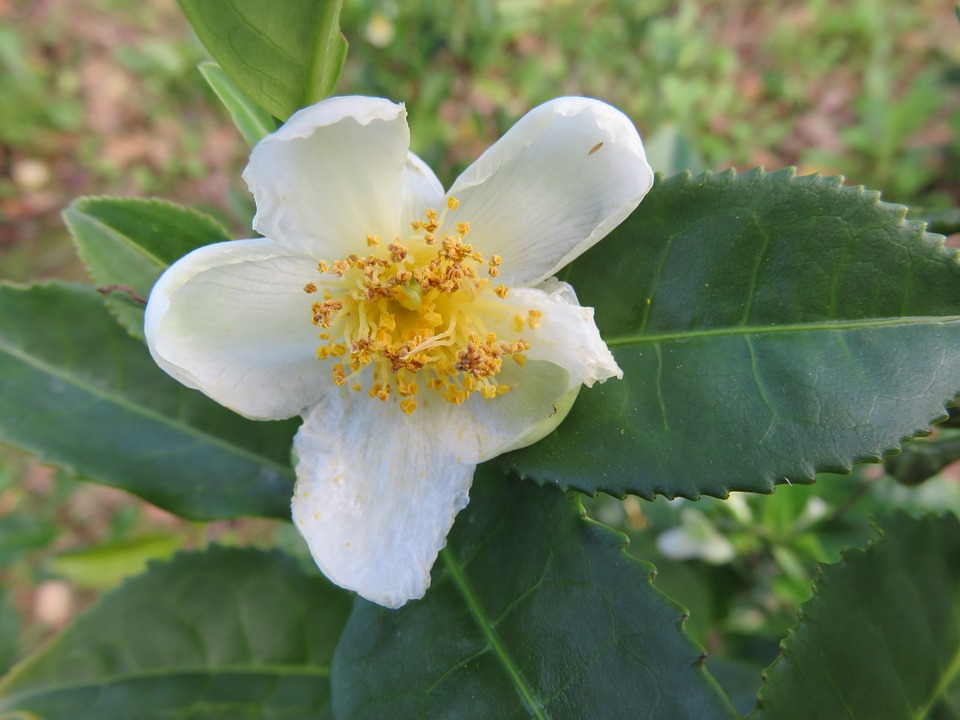
Call it a “hot cuppa” or “leaf soup” (thanks to Sheldon and Amy of The Big Bang Theory), tea is a perfect warming winter drink, and we can help you grow tea leaves at home. Tea Camellias, known botanically as Camellia sinensis, are the most widely grown Camellias in the world. Choose one from our abundant stock and make your own flavorful, aromatic green, oolong or black teas. They thrive in well-draining, slightly acidic soil in a light shade area. Periodic fertilizing will have these evergreens, white winter blooming shrubs thriving – and producing flavorful tea leaves – for many years to come.

Growing Climate

Camellia sinensis – or Tea Camellia grows in a broad variety of climates around the world. Tea is grown commercially in both tropical & temperate zones including China, Japan, and the US.

In our area, the Tea Camellia plant prefers a bright shade location.  The morning sun side of your house or under the dappled shade of a large tree would suit the plant well.

Soil should remain moist, not wet and drain should drain well.  It also needs to be kept on the acidic side. Therefore, plant all camellias in a mixture of Nurseryman’s Acid Planting Mixed 75% with 25% native soil. Feed with Azalea Camelia food and treat 2-3 times a year with Iron Sulfate to keep the pH on the acidic side.

Harvest

Tea is harvested as the first flush of leaves emerge in early spring.  Another can occur when a second and possible third flush of leaves appear in late spring/summer. Flowers arrive in fall; ours are blooming now.


Million Pollinator Garden Challenge Success!

Your garden, no matter how small, does matter!
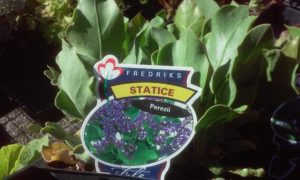
We recently got the news that the Million Pollinator Garden Challenge put on by the National Pollinator Garden Network achieved and surpassed its goal of signing up one million gardens for pollinators.

Gardeners like you commit to providing food, shelter, and a water source to benefit honeybees, native bees, butterflies, hummingbirds and other wildlife critical for pollinating our food crops.

If you are interested in signing up, please visit www.millionpollinatorgardens.org.

Consider taking up the 2019 Challenge to add three new pollinator plants, including a spring bloomer, a summer bloomer, and a fall bloomer.

Some Alden Lane favorites to help out our little winged friends:

Spring
California Wild Lilacs (Ceanothus ‘Ray Hartman,’ ‘Valley Violet,’ and others); Rosemary, California poppies and Iceland Poppies, Spirea, Lilac Vine, Grevillea, Manzanitas, Redbuds, Mallows/Lavatera.

Summer
Gaillardia, Butterfly Bush (Buddleia sp.), Milkweed (Asclepias sp.), Yarrow, Lantana, Alyssum, Catmint, Lavender, Sunflowers, Fuchsia, Santa Barbara Daisy, ‘Hot Lips’ Sage, Coreopsis, Echinacea, Black-eyed Susans.

Fall
Mexican Bush Sage, Chrysanthemums, Asters, Herbs allowed to go to seed, Tecoma, Xylosma, Pineapple Sage, Scarlet Sage, Lion’s Tail, California Fuchsia, Buckwheats, Bulbine, Japanese Anemone, Verbena.

Perennials from 6-packs

The end of summer marks a perfect time to invest in your garden with a few starts of perennial color. Planting these young plants now will allow them to establish over winter and bloom gloriously next spring.  This is a very satisfying way to garden. These plants are small, young, easy to plant and grow, and for a small investment, you can enjoy a wealth of rewards next year.

Perennials continue to bloom beyond a couple years and more. These include Coral Bells, various daisies, Delphinium and Verbena. Candytuft, Lupine, and Armeria. Planting in the fall is gentle on plants and allows them to establish more easily.

See our 6-pack and 4″ perennial collection.

Also look in our 6-pack sun groundcover section; Verbena, Santa Barbara Daisy and African Daisy, Sea Pink, among others are great perennials to plant now.

Prepare a generous planting hole for each plant. (If you prepare a 1-gallon size hole for these 2″ plants, you will soon have a 1-gallon size plant.)

Start them out well with E. B. Stone Sure Start Organic Fertilizer with Mycorrhizae (a beneficial fungus).

July Vegetable Guide

sungold-tomato

Vegetable Plant Time Amount
(family of 4)
Special Notes Plant Now
Artichoke Year ’round 3 – 4 plants Permanent, perennial. 4″ Pots
Beans, String April – May Then later again in July and August 15 – 25 ft. row Suitable for a small garden if compact varieties are grown. Can be planted more than once/year for a continuous harvest. From Starts or Seeds
Carrots Year ’round 20 – 30 ft. row Suitable for a small garden if compact varieties are grown. Can be planted more than once/year for a continuous harvest. From Seeds
Chives Year ’round 1 clump Suitable for a small garden if compact varieties are grown. From Starts or Seeds
Corn, sweet April – July 20 – 30 ft. row Can be planted more than once/year for a continuous harvest. Soil must be warm. From Starts or Seeds
Cucumbers April – July 6 plants N/A From Seeds
Florence Fennel June – August 10 – 15 ft. row Grown for it’s bulbous base. Sensitive to root disturbances. From Starts
Parsley Year ’round 1 – 2 plants Suitable for a small garden if compact varieties are grown. From Starts
Parsnips May – July 10 – 15 ft. row N/A Seed
Peppers April – July 5 – 10 plants Suitable for a small garden if compact varieties are grown From Starts
Radishes Year ’round 4 ft. row Suitable for a small garden if compact varieties are grown. Can be planted more than once/year for a continuous harvest. From Seed
Squash, summer April – July 2 – 4 plants Suitable for a small garden if compact varieties are grown. From seeds
Squash, winter June – September 2 – 4 plants Known as winter Squash because it stores over winter but it grows in summer-fall. From seeds
Tomatoes March – July 6 – 10 plants Suitable for a small garden if compact varieties are grown. Weather permitting, starting in March is possible. From Starts
Turnips February – August 10 – 15 ft. row Suitable for a small garden if compact varieties are grown. From Seed

Blooming Now – Puya has Teal-Colored Flowers

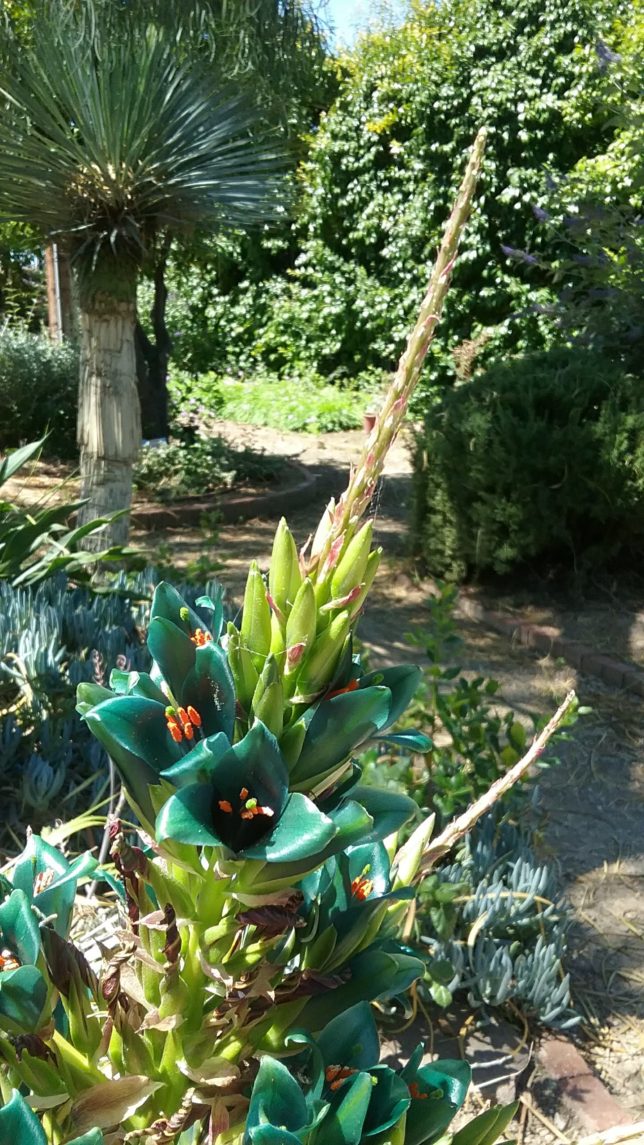
Our wonderful Puya alpestris, a teal flowering, pineapple cousin is blooming in our demonstration garden.  It has often gone years between flowering, so it is a blessing to see it twice in 2 years. It’s teal colored flower, sporting contrasting orange stamens make this plant especially unusual and a real treat to see blooming in the succulent garden now.

Come in and see the strikingly beautiful bloomer and bring your camera!

Puya is kind of rare, and we have gallons in stock.


Nurture your Plants with Maxsea Fertilizer

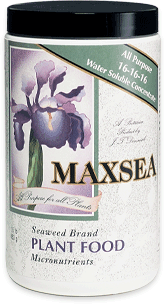
maxseaMaxsea water-soluble fertilizer provides the rich elements of seaweed, nitrogen, potassium, and phosphorus.
Give all your plants a generous feeding to help them recoup energies spent blooming and fruiting. Maxsea water soluble fertilizer is a favorite among staff members. It works quickly and provides many micro-nutrients (derived from kelp).

GOOD FOR YOUR PLANTS AND KIND TO THE EARTH

MAXSEA combines the best of nature and technology. It is a blend of the finest natural seaweed with vital secondary micronutrients and the purest plant foods available.

The resulting fertilizers are remarkably effective, easy-to-use concentrates that dissolve instantly & completely in water for fast acting, immediate results. In solution, MAXSEA’s natural brown granules turn dark seaweed green and have the fresh, clean aroma of the sea, a pleasure to use and completely safe for the environment.

Professional growers and home gardeners alike use MAXSEA plant foods with great success.

HOW TO USE

MAXSEA PLANT FOODS are an excellent choice for foliar or root feeding, as well as for use in hydroponic systems. They are easy to apply using hose-end applicators, drip systems or fertilizer injectors, or by using a gardener’s watering can. One tablespoon of Maxsea yields one gallon of plant food.

BASIC INSTRUCTIONS: Dissolve one heaping tablespoon per gallon of water. Distribute each gallon over a 3’x2′ area (6 square feet).

Additional Information from maxsea-plant-food.com

Summer Sunflowers

Sunflowers are ready for planting from 4″ starts or from seed.

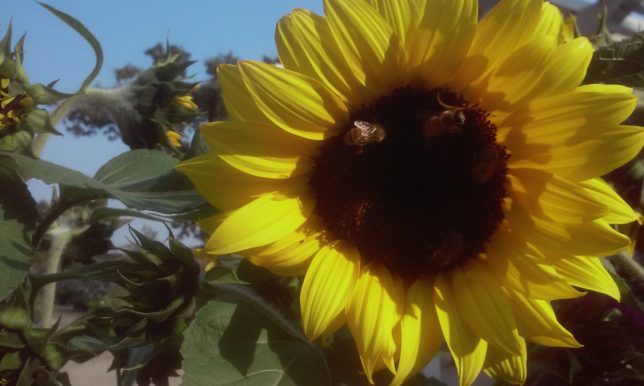
We have several varieties to choose from with a range of heights and colors.   Sunflowers provide a bright smile at the back of the flower bed. Plant the tallest types from seed – Russian Mammoth or Grey-stripe is an overall favorite, big classic flowers producing edible seeds.

Our greatest selection in 4″ pots include multi-branching varieties that can keep blooming through the summer, especially if you remove spent flower heads.

Excellent planted in groups at the back of a border or along a fence. Great cut flower or leave on the plant to mature for winter bird feed.

Plant sunflowers in organic-rich, well-drained soil in full sun.

Here are some of our 4″ varieties on sale now.


Starburst Panache
Height is 5′ – Space at 12-18″. 4-5″ blooms with brown centers surrounded by a full mane. An ideal choice for cutting gardens

Gold Rush
Branches of perfectly formed flowers with a dark disk. 4′ tall.

Baby Bear
This sunflower is an annual with pollen-free, double-petaled, orange flowers. It is compact-branching to 2′ to 3′, blooming mid-summer.

Apricot Daisy
With a pale-green center and apricot petals form daisy-like flowers on a 4′ high, branching plant.

Lemon Sorbet
Large flower heads with lemon yellow petals and dark centers. 4-5′ tall.

Butter Chiffon
Grows about chest high with many branches, producing buttery colored, pollen-free flowers. Very light lemony petals on a plant that reaches about 4′.

Country Roads
Orange flowers on strong branches; ideal for small bouquets. This one is early to flower and pollen free. Height is about 4′.

Munchkin
Very Dwarf sunflower to 2′ high with cheery, bright yellow rays and yellow-green centers. Large heart-shaped leaves, pollen-free.

Firecracker
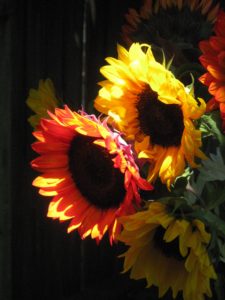
Red and gold petals with velvety-brown centers. Flowers summer to fall, 2’to 3′ high.


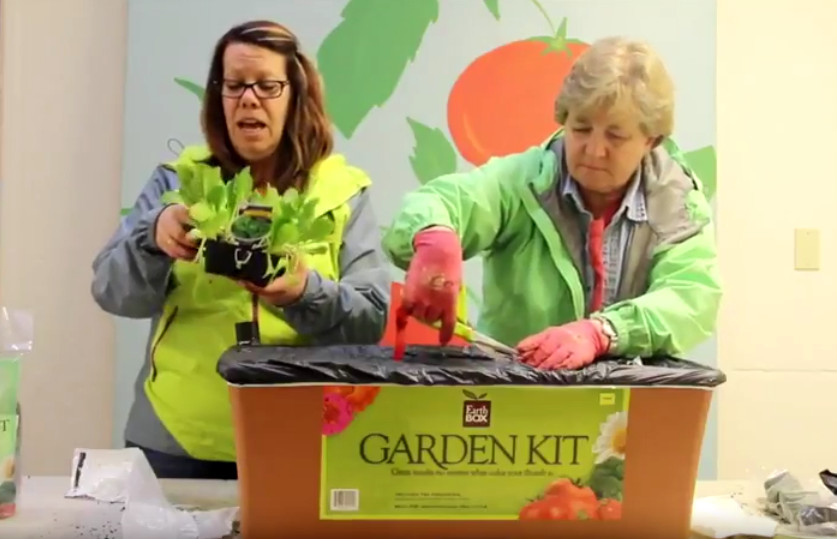
EarthBox Vegetable Gardening

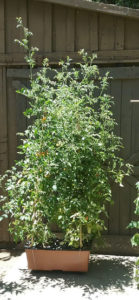
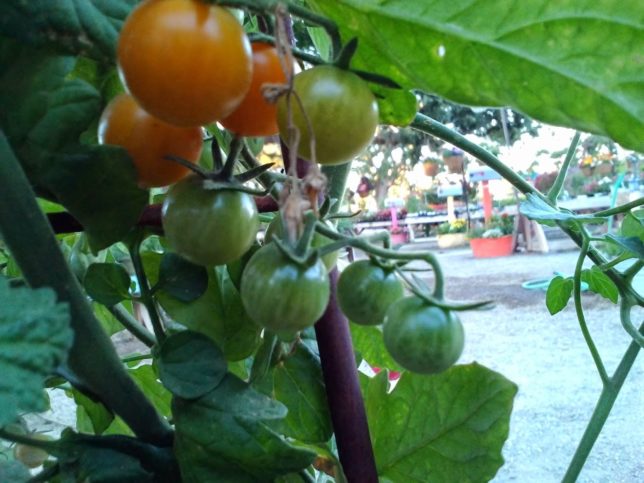
This Sungold Tomato grew over 7′ tall in an EarthBox last summer – Note: daily water required.

EarthBoxes are a smart option for container gardening. They are efficient water users allowing a plant to grow considerably more substantial than expected from such a small container, and all water goes to the plant.

EarthBoxes have been tested here and in the gardens of some of our staff, and they work amazingly well.  The EarthBoxes produce more vegetables from a surprisingly small footprint because they are a growing system with moisture and fertilizer delivered slowly and regularly.  They have a plastic mulch cover and a water reservoir, so no water is lost to evaporation or drainage; it all goes to the plant.

Essentially, EarthBoxes are a passive hydroponic growing system.  Water and nutrients are in place, and the plant pulls water and fertilizer as needed. A water reservoir in the bottom of the box has an overflow vent, so it’s impossible to over water.

Someone worked the bugs out of this system; it just works, and if you are interested in container gardening with an eye toward water conservation, EarthBoxes have a few features that mean the plant uses all of the water wasting none to evaporation or runoff.

EarthBoxes are perfect for a new gardener. The experience will be rewarding and relatively trouble-free.  They are also perfect for the gardener who has downsized and does not have space for a large garden, or who is not as able-bodied as they used to be.  Gardening with an EarthBox is easy on the body, even more so if the EarthBox is raised up to waist level to eliminate bending.  Weeds are not a problem.  Come in and take a look.

Super Water Hoses

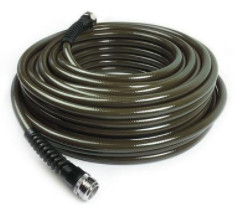
We stock beautiful and well-made garden hoses from Water Right that are lightweight and durable and built to last.

Water Right Hoses are made in the USA by a company in Oregon that set out to rethink/reinvent the garden hose.

  • Lightweight
  • Easy to roll up
  • Durable
  • Drinking water safe
  • And they happen to be attractive!

Polyurethane is said to make a better garden hose than the typical hose-making material, polyvinyl.  Polyurethane is more flexible and stronger so a hose can be made lighter. It is also lead-free.

Water Right Hoses claim to be the best quality coil hose ever made. These lightweight hoses are made for the homeowner, so they are easier to carry around than a standard hose.  They are made of virgin polyurethane, they roll up more easily, and they’re drinking water safe.  If you pick one up, you can feel a difference right away, and you don’t have to fight it to roll it back up again.

All the fittings are stainless steel. That’s part of what makes them very durable and lead-free. They’re also brilliant and beautiful, available in glossy colors including cranberry, eggplant, and olive. We have them in 3 sizes. Each hose has a full 5-year warranty. Having one provides that satisfying feeling, like owning new shoes. They are durable and beautiful, come check them out.