Citrus are the most versatile of the trees and shrubs that grow in our valley. They canbe grown as specimens, in hedges, as espalier or in containers. Citrus offer beautiful foliage, decorative fruit and fragrant flowers. With all the varieties available, the difficulty is in selecting that variety which you will enjoy the most..



Planting and Growing Citrus
Choosing the Site
Citrus prefer a hot south or west facing location with good draining soil. Test how well the spoil drains by digging a 1'x1' hole. Fill it with water. The water must be gone in 24 hours. Citrus should not be planted in a low or soggy spot that has poor drainage or in a lawn. If the water does not drain it may be necessary to raise the overall soil level by creating a mound or building a planting box or look for an alternate planting location. An open-bottom-box measuring 3'x3' wide and 8" deep makes a great raised bed. A reflective wall or fence is helpful and planting a citrus under the south or west facing eve of the house will provide some important protection from winter cold temperatures.
Preparing the Planting Hole
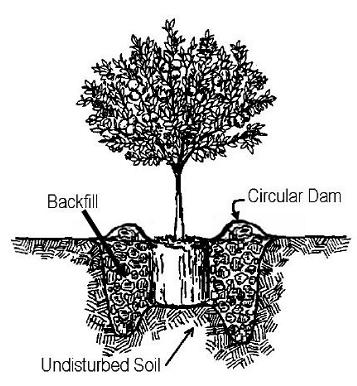
Dig a hole three times as wide as the root ball and just as deep as the root ball. The edges of the planting hole should then be dug out deeper than the center to accommodate additional soil amendments. (See Illustration)
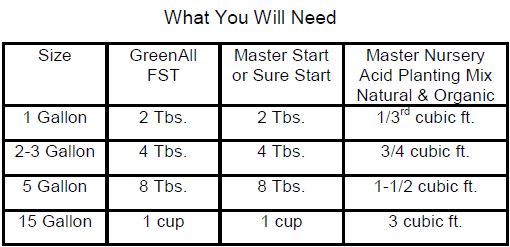
Improve the existing soil from the planting hole with Master Nursery Acid Planting Mix at a ratio of 75% Planting mix to 25% existing soil. To this improved soil, add the appropriate amount of Master Nursery Master Start and Osmocote Slow ReleaseFertilizer, mix thoroughly.
Planting
Plant by carefully removing it from its container. Gently rough the outer edges of the root ball if the soil is tight, and place it in the hole so that the top of the root ball rests slightly higher than the existing ground level (never place any soil above the root ball, covering the stem). Back fill around the root ball with the improved oil mixture. Tamp to compress the soil as you go. Use some of the extra soil to build a circular dam around the new plant to hold a generous quantity of irrigation water.
Water the plant thoroughly after you have finished planting it. Let the water soak in, and then water again. Citrus plants need less frequent watering than most garden plants. Give it a deep soak once or, at most twice week, depending on the weather, (frequent watering is the most common cause of failure with citrus).
Feeding
Begin to feed your new plant after a month or two with Master Citrus Food. Citrus plants appreciate a steady, light feeding so divide a year's supply of fertilizer into 12 equal parts and give your new plant a monthly feeding, year 'round.
Citrus prefer a hot south or west facing location with good draining soil. Test how well the spoil drains by digging a 1'x1' hole. Fill it with water. The water must be gone in 24 hours. Citrus should not be planted in a low or soggy spot that has poor drainage or in a lawn. If the water does not drain it may be necessary to raise the overall soil level by creating a mound or building a planting box or look for an alternate planting location. An open-bottom-box measuring 3'x3' wide and 8" deep makes a great raised bed. A reflective wall or fence is helpful and planting a citrus under the south or west facing eve of the house will provide some important protection from winter cold temperatures.
Preparing the Planting Hole
Dig a hole three times as wide as the root ball and just as deep as the root ball. The edges of the planting hole should then be dug out deeper than the center to accommodate additional soil amendments. (See Illustration)
Improve the existing soil from the planting hole with Master Nursery Acid Planting Mix at a ratio of 75% Planting mix to 25% existing soil. To this improved soil, add the appropriate amount of Master Nursery Master Start and Osmocote Slow ReleaseFertilizer, mix thoroughly.
Planting
Plant by carefully removing it from its container. Gently rough the outer edges of the root ball if the soil is tight, and place it in the hole so that the top of the root ball rests slightly higher than the existing ground level (never place any soil above the root ball, covering the stem). Back fill around the root ball with the improved oil mixture. Tamp to compress the soil as you go. Use some of the extra soil to build a circular dam around the new plant to hold a generous quantity of irrigation water.
Water the plant thoroughly after you have finished planting it. Let the water soak in, and then water again. Citrus plants need less frequent watering than most garden plants. Give it a deep soak once or, at most twice week, depending on the weather, (frequent watering is the most common cause of failure with citrus).
Feeding
Begin to feed your new plant after a month or two with Master Citrus Food. Citrus plants appreciate a steady, light feeding so divide a year's supply of fertilizer into 12 equal parts and give your new plant a monthly feeding, year 'round.